





.png)








03 SEPTEMBER 2026
 Email
Email Linkedin
 Facebook
 X
X
 Copy Link
 Transcript
Reward is moving out of the HR back office and into the heart of business strategy. From improving frontline productivity to navigating AI and pay transparency, decisions about how employees are rewarded increasingly shape organizational performance, workforce trust, and a company’s ability to compete.
In this episode of C-Suite Perspectives, Sara Murray, Managing Director, International at The Conference Board, is joined by John Beadle, Senior Research Fellow and Corporate Reward and Global Mobility Council Director at The Conference Board, to explore insights from the Future: Reward Europe 2026 event and what they reveal about the changing role of reward leaders.
They discuss why successful reward redesign begins with diagnosing the business problem, how global benefit standards are challenging traditional market-based approaches, and whether AI will make reward functions more effective or simply reduce head count. They also examine the unfinished work of EU pay transparency, differences between US and European compensation, the more disciplined use of ESG measures in incentive plans, and the emerging issues that should be on reward leaders’ agendas for the year ahead.
More from The Conference Board:
C-Suite Perspectives is a series hosted by our President & CEO, Steve Odland. This weekly conversation takes an objective, data-driven look at a range of business topics aimed at executives. Listeners will come away with what The Conference Board does best: Trusted Insights for What’s Ahead®.
C-Suite Perspectives provides unique insights for C-Suite executives on timely topics that matter most to businesses as selected by The Conference Board. If you would like to suggest a guest for the podcast series, please email csuite.perspectives@conference-board.org. Note: As a non-profit organization under 501(c)(3) of the IRS Code, The Conference Board cannot promote or offer marketing opportunities to for-profit entities.
Sara Murray: Welcome to C-Suite Perspectives, a signature series by The Conference Board. I'm Sara Murray, Managing Director, International at The Conference Board, and guest host of today's episode. The world of employee reward is changing rapidly. Employers are under pressure to improve productivity; respond to evolving employee expectations; manage increasingly complex technology and vendor relationships; and navigate continuing debates around transparency, sustainability, and inclusion.
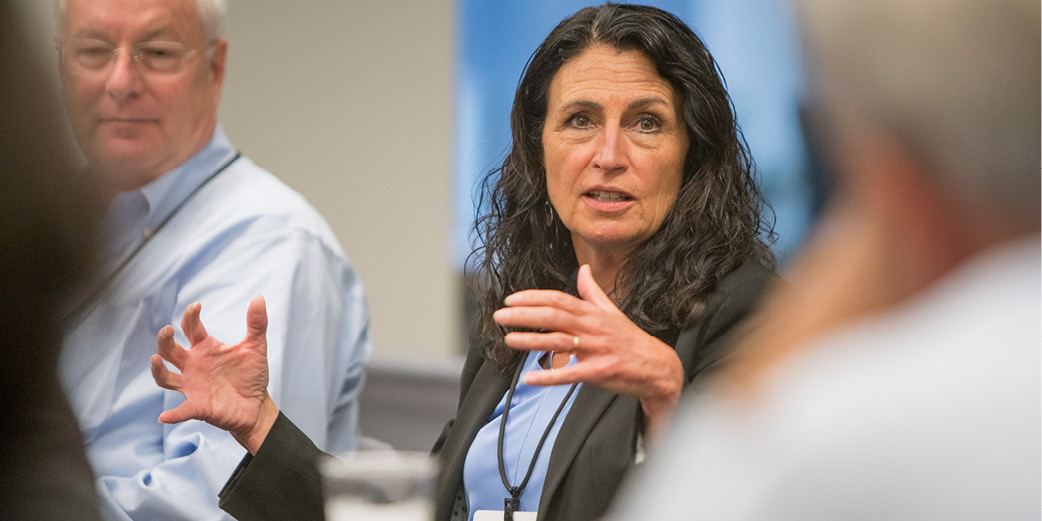
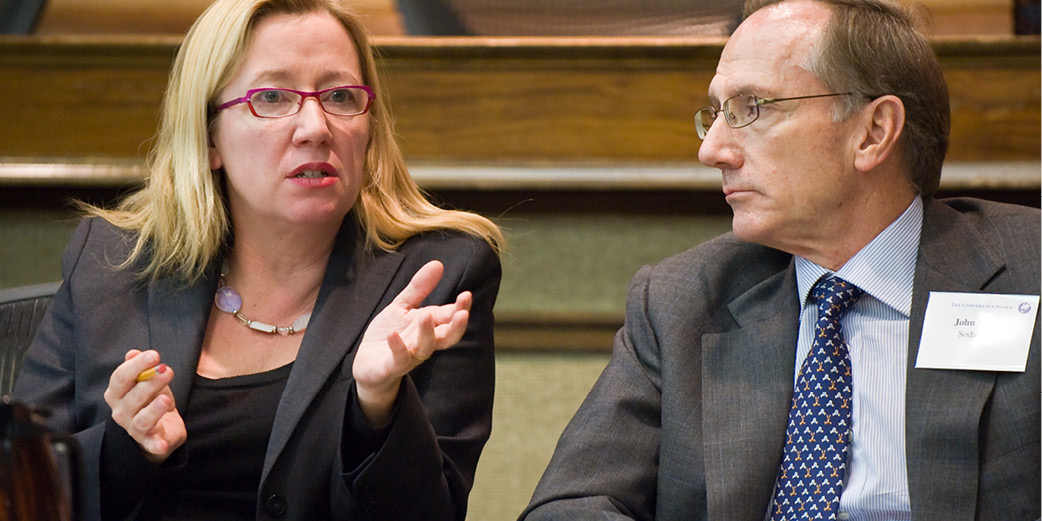
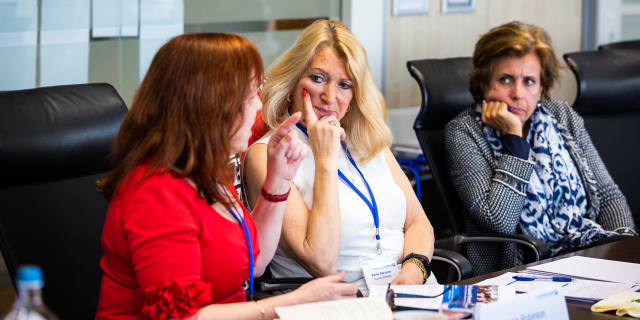
The Conference Board's 2026 Future Reward event brought together senior reward leaders to examine these challenges. Today, we'll use some of the discussions from that event as a starting point, while looking more broadly at the opportunities and issues likely to shape reward over the next 12 months.
Joining me is John Beadle, Senior Research Fellow and Corporate Reward and Global Mobility Council Director at The Conference Board, but also the Program Director of the 2026 Future Reward event. Welcome, John.
John Beadle: Thanks, Sara, and thanks for the invitation to speak.
Sara Murray: You're very welcome. Let's begin with one of the central questions raised at the Future Reward event. Has reward finally climbed over the factory gates and demonstrated that it can make a meaningful contribution to productivity?
John Beadle:Yeah. Look, Sara, we had two great presentations, by the way, leading edge examples, breakthrough thinking on frontline employees. We had Dr. Ronel Nieuwenburg, who shared the work that she'd done with the international mining company, Sasol, to completely redesign their production bonus and recognition plans.
And we had Kent Fredrickson, who provided a case study in the work we've done to reshape benefit provisions to be more appropriate for frontline employees. And Mark Maranzon from Korn Ferry gave an overview of the work that had been done right across the region in reshaping frontline work to improve productivity.
My main takeaways from that session, first and foremost, quality diagnosis of the problem. Ronel gave a really good example where there was declining production, lower quality, increased cost, and she went in and spoke the language of the business to really understand some of the problems they were trying to solve, and looked at reward systems.
Bonuses were becoming guaranteed pay disconnected from performance and some of the recognition rewards weren't resonating with employees. Having high-quality data to engage with the business is also very important, and Kent used this fantastic factory review dashboard with some of the line leaders to really understand some of the issues that were present in the business and to present appropriate compensation recommendations, which I thought was pretty cool.
The case studies really reflected the importance of leadership owning the change, understanding what problems we were trying to solve, and getting there in the way that they were going to be addressed and communicated. And last but not least, having labor partners as part of the process and being used as a sounding board for the design, not just as a take or leave at the end of the design.
And investing in change management as a consequence that was appropriate, simple, and engaging.
Sara Murray: It sounds like the biggest shift is that reward,it's no longer at the sidelines, but it's really working with the business strategy. So as you said, when it's properly aligned with the objectives, the values, the business reality, it can influence behavior, it can support real business change.
And as you said, I think what really comes through is that leadership and communication are so critical to making that work, and that's where the heads of total rewards really need to do the work.
John Beadle:Couldn't agree more, Sara. And just by the way, I think having reward communities that are not deterred by national industry or local agreements from making the changes that are necessary and are prepared to engage with employee relations, these are a couple of great examples where if you take the courage and the confidence, you can have some great success.
Sara Murray:Yeah. Employee benefits have traditionally been heavily influenced by market practice and benchmarking. Is the era of market-related employee benefits coming to an end? And if so, what might replace that?
John Beadle: We had a really strong panel from Willis Towers Watson, a couple of seasoned practitioners from Hitachi, and from Proctor & Gamble to address this question.
I thought it was quite clear from some of the discussion that global companies are actually moving toward global minimum standards for certain benefits, rather than just being shaped by local market practice. And Sara, the background to that, I do believe was COVID, where a lot of employees were caught by surprise in not having life cover or medical cover or some kind of family support because it was anchored on local benefits.
So what are we seeing now? We're seeing minimumstandards,they're ranging from travel accident, employee assistance programs, parental leave, life insurance, paid time off. But what really surprised me is actually it's moving further.It's moving into what I'd call quite challenging areas like pension, health care, health screening.
And what really struck me is from the practitioners is the application of these minimum standards came from a strategic intent or their culture rather than market practice.
Sara Murray: It's a really interesting shift. Instead of what does the market provide, what do we believe our people should be able to expect wherever they work.So the move to global minimum standards, but still allowing for local differences. Soit's consistency but not necessarily uniformity.
John Beadle: Absolutely. And Sara, what really came through from the conversations were the need to do proper due diligence before introducing any of these minimum standards.
There was a great example where having done the due diligence, they realized it was going to be impractical or too costly or unimplementable in some countries, which would've caused big reputational damage. And the importance of piloting to iron out some of the issues that arose, and the necessity for strong communication and change management to make clear what is and is not covered by these new minimum standards.
Sara Murray:Yeah. Technology obviously is becoming increasingly important across all functions but especially the reward function. Is the future of heads of rewards shifting away from being primarily people leaders and toward more managers of technology, data, and external vendors, do you think?
John Beadle: Sara, this was prompted by a challenge that came from last year's event, where we had one of the participants provoking us by saying reward leaders need to prepare to move from being people managers to vendor managers.
And that their operations will be replaced by bots and their advice by agents. And again, we had a super panel.
Gary Brundolin, professor at FHNW in Switzerland. We had Joseph from Workhuman and two reward leaders. We had Ali Raza from Sanova and Bertie Hamon from Aptiva. And Gary made a great intro by explaining that we have a choice point as a reward community. We need to trade off between efficiency, in other words, reducing head count, and effectiveness, in other words, improving the quality of the work undertaken by our staff.
And the general sentiment among the practitioners, and I have to say the delegates in the room, is that we will pursue the effectiveness route. In other words, we'll redesign to make the work more interesting and empowering. But my personal concern is that this kind of laudable attempt is going to be swept away by a tide of CFO or executive committee kind of reflex to pursue efficiency.
And unless we prepare to show why there are business benefits in effectiveness, we may just be carried by that tide.
Sara Murray: It sounds like AI's more likely to augment leaders, rather than replace them. So take on the analysis, take on the modeling, but free them up where they can do more of the judgment, fairness, change management, communication over time.
John Beadle: Absolutely. And there are certain prerequisites for making this stuff work, such as having good data quality, a high degree of process standardization, and strong governance, which frankly is a bit of a challenge for some of the larger firms.
Sara Murray:There's a popular perception that European companies are continually chasing the US market when it comes to pay. That was a really interesting session. Do you think that the event challenged that assumption in reality?
John Beadle: First of all, Sara, again, we had a great panel by the way. Iqbal Jit for a partner at Deloitte. We had Stephanie Boyd, EVP at Shell. Anne Engerman, who was VP Reward and Mobility at Vestas.
I would say that when you look at the data, and certainly here Iqbal I think gave a good overview, that actually US quantum at least continues to accelerate away from the European peers, especially in terms of long-term incentive plan (LTIP) provision. And some of the structural aspects of US packages, such as one I would call bumper incentive awards-- at will employment, more frequent new bad leaver provisions-- they are still firmly on the other side of the Atlantic.
But there is some evidence of a structural reposition when you have employees who are working or have previously worked in the US and where there's a kind of cultural desirability to have that differentiation.
Sara Murray:Soit's more nuanced than the headlines imply?
John Beadle: Absolutely. Okay. The fascinating dimension, Sara, certainly from the European perspective, is that the quality of living and the level of state-provided benefits, even if they are funded by higher taxation, may be a pull factor in Europe, notwithstanding the lower pay rates. So my conclusion is, yes, there may be some headline-grabbing exceptions, some US-style packages in Europe, but they're very much the exception to the rule and there's still much more regional differences for the foreseeable future.
Sara Murray: And it sounds, like you said, that it's more looking at the whole value proposition not just purely pay.
John Beadle: Absolutely.
Sara Murray: Okay. We're going to take a short break and be right back with more of my conversation with John Beadle.
Welcome back to C-Suite Perspectives. I'm your host, Sara Murray, Managing Director, International at The Conference Board, and I'm joined by John Beadle for this discussion.
So pay transparency, as we know, has dominated the reward agenda for several years, particularly in Europe. Can organizations finally begin to move their attention elsewhere or is there still a significant amount of work to be done?
John Beadle:Yeah I sigh slightly, Sara, I have to say. The last three years we've had pay transparency top of this priority list. The typical reward leader. And is it really beginning to recede?
Now, look, we asked this question of Anthony Poole, partner at Aon; James Williams, who's head of reward at Ericsson; and our own Marion Devine, principal researcher at TCB. She's had the joy of conducting a three-year longitudinal survey on this topic, right?
What did I pick up? Frankly, a sense of frustration by many. This was seen as a fantastic opportunity to lead a, I would say, an initiative that was designed to create a greater fairness among employees.
Sara Murray:Yeah.
John Beadle: Develop leadership skills to make more effective pay decisions. Some had even harbored ambitions to have this approach at the global level.
But frankly, there is a bit of exasperation that they've had to, in the end, chase country compliance given the opaque guidance, the chaotic and frankly slow implementation of country legislation. We know many countries have still not executed the directive and issued the legislation. And the degree of country variation that frankly makes it very challenging to adopt a holistic approach.
I have to say, Sara, as well, there was a little bit of sense of collective guilt that our community had not addressed this issue in a more proactive way, and had only taken it seriously when they were forced to do so by regulation.
And it'srather like the regulations that were imposed on the finance sector after the financial crisis. We should have been on the front foot and not been forced into this issue. Directly answering your question, finally, companies are still getting to grips with issues like data quality; converting outstanding pay inequities; management training; and linking pay, performance, progression, and disclosures.
And supporting technology is also being a big deal for a number of providers. And frankly, some of those providers are overwhelmed with the volume of requests they're receiving.
Sara Murray: So certainly not finished with pay transparency. In some ways the legislation was only the beginning.
John Beadle: I fear, Sara, that we're into the fourth edition. Yeah. So stand by for the next event.
Sara Murray: Okay. Environmental, social & governance (ESG) and diversity and inclusion (D&I) have also been increasingly linked to executive and employee reward. Is the party really over for those connections or are companies simply becoming more selective and sophisticated in how they use them?
John Beadle: Yeah, Sara, one of the themes coming through from our members is this urban myth that companies are actually reigned back from these links between ESG, D&I, HR, and reward because of geopolitical influences, the accusations of greenwashing, and some of the changing stakeholder views that they're facing.
We had Roel van der Wiel, partner at Deloitte, gave a good sense of proportion on this. He gave us a perspective that while there may have been a material shift in North America, developments have slowed but not really stopped in Europe and actually adoption is still continuing apace in Asia.
We had some practitioner examples in Europe that were moving in two different directions. Haleon has continued to adopt an ESG qualifier, for example, which impacts the financial metrics of any of their LTIPs. And there are remaining ambitions in Haleon, such as reducing petroleum-based plastic packaging, which very much feature in the HR reward proposition.
Now you contrast that with ABB. ABB replaced emission objectives from their short-term incentives (STIs) and their long-term incentives (LTIs), but this is in the context of their overall objectives having been achieved. They still have other ESG commitments included in their STI, including around the D&I space.
So my take in summary, yes, there's been some reversal out of ESG and I think that actually that has, aside from geopolitical influences, been the result of qualitative and discretionary approaches to some of the measures that have led to inflated outcomes and payments.
If you set reliable and auditable targets, especially for emission-based measures, then this thing can be successful and we do see some really good success cases in Europe.
Sara Murray: It sounds like they're becoming more disciplined. There's still broadly a commitment to ESG, but tougher questions about do the measures that they put into incentive plans create genuinely material changes to performance and value creation.
John Beadle: Absolutely.
Sara Murray: Looking beyond the event and towards the remainder of the year, what issues do you expect reward leaders in their organizations to be discussing over the next 12 months? Obviously, pay transparency is still in there because we're only at the beginning, but what else?
John Beadle: This is always dangerous territory, Sara, because as people will then go back and refer to this and see how close or not I actually was.
I think the whole AI debate will still be very much there alongside pay transparency on reward design, on the tools that we use, and frankly, the way we organize our work. So I see that certainly going to be a future for the next few years.
What else do I see on the horizon? I think reviewing the international mobility proposition post-COVID, because there's been a strong swing toward short-term and virtual assignments. There is a need to align with what the new talent agenda is and I think that will be the focus for our new Global Mobility Council, by the way.
Skills-based pay gets talked about a lot. I think the focus on skills-based pay will be on market premium, especially for AI and technology, as opposed to some complex evaluation systems which frankly have already gone the same way as competency-based pay programs.
Some of the knock-on implications of pay transparency, I think, will start to be felt, including performance-related bonuses that have been based on more discretionary judgment or legacy pension plans that have a significant skew on total REM and therefore create a kind of dysfunctional pay equity outcome.
Any remaining executive top-up plans, health care, pension, life insurance, I think they're going to continue to be systematically wound back because of stakeholder pressure. And last but certainly not least, the continued focus on productivity and value add which I think will get the reward leaders back into the blue collar and manufacturing pay.
If I may say briefly, Sara, the pieces that I am surprised I don't see coming up in the next couple of years that perhaps should be. We need the same focus on the AI EU directive as we have on pay transparency, because this is going to have a big impact on the tools that we use. I still don't see anywhere near enough focus on sales incentive plans, which can be a major driver for business success.
And some of the tools that we'll need to retain, frankly, the more mature generations given the skill gaps that are going to develop over the next five to 10 years, particularly in critical areas like engineering. We are indeed in the process of engaging with our council members on what will be the critical issues for the 2027 event, so we'll see how many of these actually feed through in practice next year.
Sara Murray: Wow. But when you put all of that together, it does seem that the reward function is moving into a different place-- more strategic, more transparent, using AI to be more data driven, but at the same time perhaps more human.
John Beadle: I think that actually AI could be extremely beneficial in that respect because those reward folks who have been drowned in the administration and the operational could very well be liberated to apply a more strategic focus and more diagnosis of what are the real issues in their organization. So that's my glass half full prognosis of the future.
Sara Murray: What I take away from this conversation is that reward is increasingly about intentionality, and organizations need to be able to explain not just what they're doing but why.
And I think that's what puts the reward leaders right at the intersection of business strategy and employee trust, and I think it's a really exciting time for them.
John Beadle: It's always been a cool place to be, Sara. It's just become even cooler.
Sara Murray: Yes, exactly. We're at the end of this episode. Thank you, John. It's always great to talk. Thank you for your time, and thanks to all of you for listening to C-Suite Perspectives. I'm Sara Murray, and this series has been brought to you by The Conference Board.
C-Suite Perspectives / 12 Oct 2026
Learn about what it will take to meet America’s rising demand for reliable, affordable power.
C-Suite Perspectives / 08 Oct 2026
Learn how customer empathy informs strategy, why CEOs must be willing to say no, and how authenticity can help employees understand difficult decisions.
C-Suite Perspectives / 05 Oct 2026
No CEO can personally master every technological, geopolitical, and economic challenge confronting a modern organization.
C-Suite Perspectives / 02 Oct 2026
US salary increase budgets are projected to remain at 3.5% in 2027, unchanged from 2026.
C-Suite Perspectives / 01 Oct 2026
In this episode of C-Suite Perspectives we discuss how boards can identify strategic errors before they threaten the future of the company.
C-Suite Perspectives / 29 Sep 2026
US Consumer Confidence fell to 81.9 in September, marking a third consecutive monthly decline.