





.png)



11 September 2026 / Report
 Email
Email Linkedin
 Facebook
 X
X Copy Link
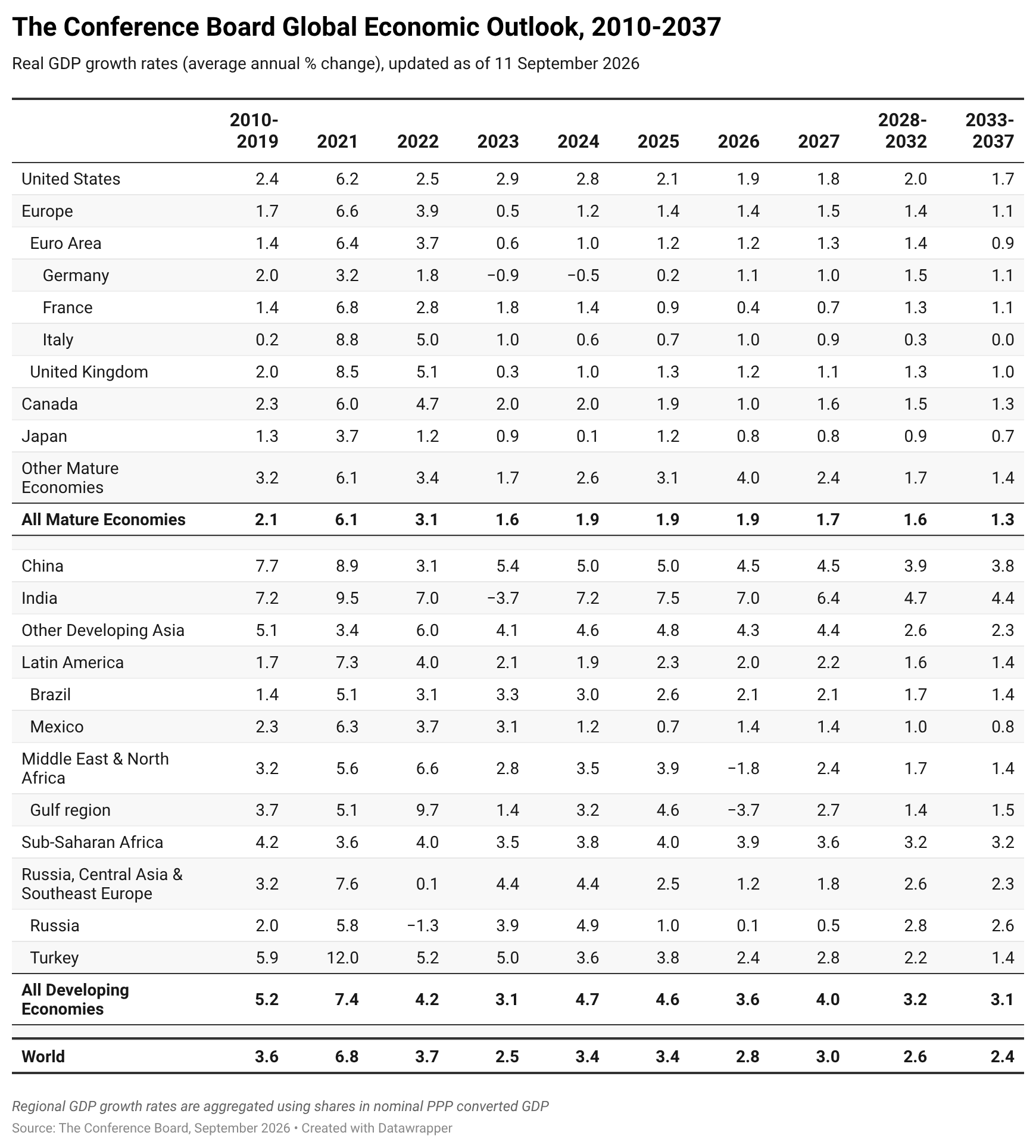
The global economy continues to expand, but headwinds are intensifying. Strong investment in artificial intelligence (AI) is supporting activity in the US and several Asian economies, while exports and manufacturing are helping sustain momentum in parts of Europe. India also continues to benefit from broad-based domestic growth. These tailwinds have allowed the broader global economy to withstand the energy shock thus far.
However, the outlook has become more fragile. The intensifying conflict in the Middle East recently pushed oil prices back above $100 per barrel, adding to inflationary pressures and weakening household purchasing power. Central banks are responding with renewed monetary tightening, raising the risk that higher borrowing costs will deepen consumer slowdowns—particularly in the United States and parts of Asia.
Trade has remained surprisingly resilient, but ongoing tariff volatility could alter the outlook. Overall, the balance of risks remains tilted to the downside: continued investment in AI could provide a stronger boost, but prolonged energy supply disruptions, tighter financial conditions, or renewed trade escalation could weaken economic activity in 2027.


myTCB® Members get exclusive access to webcasts, publications, data and analysis, plus discounts to events.