







29 JANUARY 2026
 Email
Email Linkedin
 Facebook
 X
X
 Copy Link
 Transcript
Finding skilled talent remains difficult. Find out how CEOs and CHROs plan to develop their workforce this year.
Nearly 37% of CEOs say finding qualified workers is a challenge, according to the C-Suite Outlook 2026 survey by The Conference Board. How have labor challenges evolved since the Great Resignation, and what can CEOs do to attract and keep skilled talent in 2026?
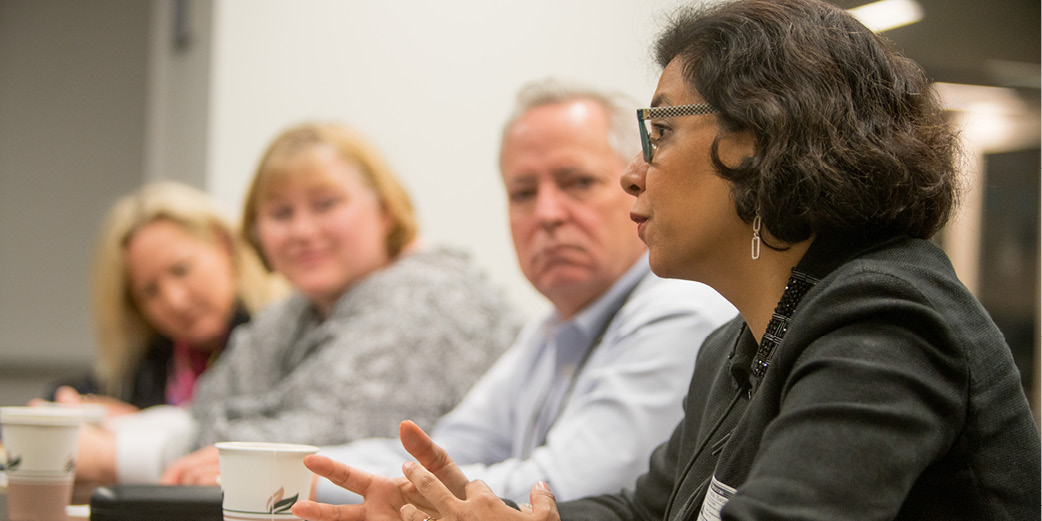
Join Steve Odland and guest Diana Scott, US Human Capital Center leader at The Conference Board, to find out why AI requires HR to rethink job roles and skills sets, how CEOs and CHROs rank priorities such as productivity and organizational transformation, and which policy issues HR leaders are monitoring.
For more from The Conference Board:
C-Suite Perspectives is a series hosted by our President & CEO, Steve Odland. This weekly conversation takes an objective, data-driven look at a range of business topics aimed at executives. Listeners will come away with what The Conference Board does best: Trusted Insights for What’s Ahead®.
C-Suite Perspectives provides unique insights for C-Suite executives on timely topics that matter most to businesses as selected by The Conference Board. If you would like to suggest a guest for the podcast series, please email csuite.perspectives@conference-board.org. Note: As a non-profit organization under 501(c)(3) of the IRS Code, The Conference Board cannot promote or offer marketing opportunities to for-profit entities.
Steve Odland: Welcome to C-Suite Perspectives, a signature series by The Conference Board. I'm Steve Odland from The Conference Board and the host of this podcast series. And in today's conversation, we're going to discuss The Conference Board's latest survey, the C-Suite Outlook for 2026, and specifically the implications for human capital.
C-Suite Outlook survey was carried out in the latter part of 2025 with more than 1,700 C-Suite executives, including over 770 CEOs from around the world. And this is the 27th annual survey conducted by The Conference Board—so great longevity.
And joining me to discuss all of this is Diana Scott, who heads our US Human Capital Center. Diana, welcome.
Diana Scott: Thank you, Steve. I'm happy to be here.
Steve Odland: So Diane, lots of CEOs, lots of CHROs participated in this survey, and what did they tell us?
Diana Scott: I'm very concerned about labor markets, as that's my area of specialty, so I'll jump right into that one. And CEOs talked a lot about their critical labor market challenges in 2026, and what they said was, we know that they said, globally, uncertainty is one of the defining challenges. And in terms of labor markets, they said that, internally, they're really concerned about finding qualified workers. In fact, that came up as a challenge for 37% of them, and that was closely followed by the lack of in-demand skills.
So if you look at those two things, think of them collectively, what that tells me is they're really talking about a mismatch of not just finding people, but they really are thinking about, how do I find the right capabilities at the right speed, at the right time? Because it's finding qualified workers, but also finding the right skills.
Steve Odland: Let's just drill on that for a second. cause this is the 27th time we've done this. Just a few years ago, in COVID, the whole labor market crashed, everybody was sent home, and so forth. And then coming out of that. It was a labor shortage. It was the Great Resignation and all that. And then that kind of stabilized a little bit.
So this is truly different in that they're now saying, OK, there's not a plentiful labor market, or the issue is skills. It's matching what we need to what's there. That's a different message, isn't it?
Diana Scott: It is absolutely a different message. This is not about finding people or finding workers. This is about finding the right workers who have the right skills. And that is a very different thing coming out of this. I think there are some other things that came out of this survey, as well.
If you look at it, there are some real tightness in critical roles. There are also some demographic pressures if you look around the world. I think there are aging workforces, there is shrinking labor participation, if you look around the world. And then we did see some wage pressures in some specialized roles, and I think we can talk about that later on, as well. But the real, absolute big issue is this issue around finding the right capabilities and the right skill sets. And that is very different.
Steve Odland: Yeah. And we've heard over the past year that CEOs are hanging on their people. It was skills banking, essentially, because when they came out of COVID, they couldn't find anyone, everybody's quitting. So it's like, OK, well, we're just going to just hold on to everybody. You see a little bit of a loosening in that, but not a lot. But the difference this time is they're looking for the right skills. They're not just going out and hiring like crazy. So the hiring is slowed, but it's the skill set.
Now, there are labor shortages across different regions. Talk about regional differences.
Diana Scott: Sure. I think Europe and North America, they're definitely facing an aging population. And I think the biggest issue they're going to be facing is some tighter immigration pipelines, for different reasons. I mean, in Europe, there are always immigration issues in terms of who's allowed in. And in North America, we know there's going to be some tightening around immigration because of some of the different visa issues that we're seeing. So that's an issue for North America and Europe.
I think in Asia, what we're seeing is less labor supply. And there's skills alignment issues, especially around AI and digital adoption. So they have had such rapid technology adoption that we're seeing skill gaps there, even though there's a tremendous amount of skills available in those regions. But there's still a skills gap because the need is rising so high, but the skills aren't coming along educationally at the same rate. So that's going to be an issue for them in the Asia-Pacific region.
One of the things that we see specifically is in Japan, where they have a unique situation demographically. They have an aging population, so that's a top concern for them. In particular, 36% of the CEOs there said their aging population is a huge concern for them, and that's something that they're going to have to be looking at.
Steve Odland: Now an overlay to all this. So there's the skills issue as you've articulated, but the overlay to all this is AI. And so, it's not skills in a vacuum. It's skills in shifting sands, as AI comes into the workplace and people try to deal with that.
Talk about the impact and the needs from a skill standpoint on AI, and then we'll talk about AI more broadly.
Diana Scott: Well, as I said at the beginning, we know that finding the right capabilities at the right speed is the big issue, and CEOs are consistently ranking skills gaps alongside hiring difficulty as the top internal constraints.
So the AI disruption that's coming, or that is already here, I should say, is the top technological downside risk globally, if you think about it. That came in at 30.3%, and that really is a reflection of the concern that people have around readiness and skills. So productivity loss, really, when you think about it, comes from misaligned skills and not headcount shortages.
It's that thing that we were talking about earlier. We have plenty of people who can work. We don't necessarily have the right skills for them to do the work. And if you think about what skills we actually lead need right now, those skills are certainly digital literacy, but they're also other skills. Things like change management, critical thinking, leadership are super-relevant when it comes to driving productivity in this age of AI. And that's something that we're going to have to really focus on going forward. And CEOs are very concerned about that.
Steve Odland: Yeah. Now, AI generally has changed a lot. A few years ago, nobody could spell AI. It was brand new, it was this mystery thing. Last year, the biggest concern was, how do I invest enough, fast enough? And they were throwing money at it because they didn't know where it was going, they didn't know how to apply it, but they sure as heck didn't want to fall behind.
This year, the differences in AI is, OK, we need some ROI on that. And so you start to hear about layoffs related to AI, and AI's going to take all the jobs, and then, that's not necessarily proving to be the case. It's more a matter of making sure that you got enough money to pay for AI. So, all of this dynamic is tied up in the human capital world. And so talk about what everybody's telling us.
Diana Scott: Specifically, automation and AI is really reshaping labor demand. And therefore, it's shaping the HR priorities, because AI is actually reconfiguring work rather than replacing the jobs outright. And I think that's very important.
The HR focus is shifting from the workforce size to the workforce capability, and I think that's an important distinction. Automation and AI can maybe change, you can lose jobs. You actually still need people who can do different things. You need different capabilities now.
So there's increased demand for things like judgment, perhaps. Ethics, leadership, learning agility. You also need to think very carefully about digital and data literacy, change management skills within the organization. And HR is going to play a really central role in workforce planning and skills intelligence. So the HR organization really needs to step up now in order to help drive this kind of change through the organization.
Steve Odland: Yeah, and it's not about layoffs, the AI's just going to take everybody's jobs. I mean, there will be jobs lost, as there is automation and all the deployment of AI, but it then frees up human capital to do more productive higher-order work. That's what I hear you saying, number one.
Diana Scott: Right.
Steve Odland: There's also job creation around AI, cause everybody needs an AI expert, and you've got to figure out how to deploy it. And of course, there's the whole AI industry that is booming. So, at an economy level, it is really a job gain, rather than a job loss.
But within a company, this isn't like rolling out Microsoft Office or Zoom. It's not about, oh, here's an app, let's train people on it. This is fundamentally a game-changer in the sense that it will help people create. There's agentic AI, it'll help take over some of that and automate customer interface. It really impacts so many different jobs.
And when you start talking about skill set mismatches, again, it's not just a static world. It's also in this dynamic world of trying to find those skills that best marry with the needs that now are created by AI implementation.
Diana Scott: And you brought up a really good point, because it's not just about the skills mismatched, it's also about how the work gets done. So it's really transformative, and I think that gets to workflow, it gets to how things are organized. Not only the types of jobs, but also how people work together. And that gets to organizational dynamics, which is why this is much, much bigger than, as you said, than just, OK, you're going to go from this job to this job, or you have to learn this skill to this skill.
Which is why it makes it so much more important that people understand how to lead through that kind of transformative change, how people need to understand how to guide that change. People need to be able to critically think about, well, how are we going to change the processes by which we actually work? This is much, much bigger than any kind of change organizations have really gone through in the past, and it's going to flip things basically upside down.
Steve Odland: Yeah. And your comment on HR's role in this is different. I mean, it's not just, OK, HR go out and source some people who understand what AI is all about. This is about almost redoing every job description in the company that takes into account the skills that will be automated, but then the new kinds of skills that will be required in order to facilitate the implementation of AI. They aren't the same thing.
So if you had a customer service job before, and someone was good at being on the phone and doing this. Now it's a different role because AI takes some of that. And so, there's higher-order work being done, different skill sets. It really is a strategic shift and a big burden, but also a big opportunity for human capital folks.
Diana Scott: Exactly.
Steve Odland: Yeah. OK. So, productivity came out in the survey as a big area for both CEOs and CHROs. AI hopefully will contribute to that. But what did we hear beyond that?
Diana Scott: Well, we did hear that productivity ranks first among human capital priorities for CEOs, it was at over 27%, and that was ahead of flexibility and well-being, which is interesting cause we know that many employees have also really pushed for flexibility. We've had a lot of return-to-office discussions, you and I, and what does that really mean?
I think that flexibility is kind of table stakes at this point. We've gone way beyond that conversation, and I think that productivity is really dependent so much on leadership and skills development, on getting effective managers that can enable teams to adopt new tools and new ways of working. CEOs recognize that, and that's where they want people to focus, and so that's why it's their number one area of focus for human capital. I get it. I understand. Makes sense.
Steve Odland: All right, listen, we're talking about The Conference Board's latest survey, which is the C-Suite Outlook for 2026. We're going to take a short break and be right back.
Welcome back to C-Suite Perspectives. I'm your host, Steve Odland, from The Conference Board, and I'm joined today by Diana Scott, the leader of our Human Capital Center at The Conference Board. OK, so Diana, we were talking about before the break all of the issues around productivity and AI and so forth.
In order to effect that, CHROs need to deliver and implement change management and transformation. And so it makes sense that they would prioritize that a little higher than CEOs cause they're thinking about the implementation side of it. Talk about what we heard from both CEOs and CHROs on organizational transformation.
Diana Scott: That was interesting because CHROs ranked organizational transformation 23% in terms of their priorities, and CEOs ranked it at 17%, so much higher for the CHROs. I wasn't actually surprised by that cause I think HR leaders really experienced firsthand the impact that maybe outdated structures can block the ability to effect that kind of change.
And if you're talking about being able to deploy new skills and get the organization to adopt AI to adopt new ways of working, I think the HR organization is the one that experiences it firsthand when those challenges exist. And perhaps the CEO is just saying, you just need to go get it done.
So I think the CHRO's really, really focused on the execution challenges of that transformation much more directly than perhaps the CEO. They also understand that that transformation really is necessary because it's going to affect the culture, it's going to affect how they structure incentives. They have to think about roles and responsibilities. They have to think about the leadership it's going to take. It's a lot of work, and they know that it's really, really important to do that in order to get the right outcome, which I think is to deliver the kind of productivity that the CEOs are prioritizing. The two are inextricably linked, in my mind.
Steve Odland: Yeah. We often joke that the HR function has more buzzwords than any other function. One of those popular ones recently has been agile organizations. But it's really true. I mean, in this world where everything is changing, you do need the ability of the people in the organization to respond.
If people go, oh no, I can't do that. Can't's a four-letter word, but I can't do that, or I won't do that, another four-letter word. You're stuck. And then you're having to rip people out and yeah, it's a mess. It's the adaptability, the capabilities around adaptability and agility, that really is important in this period of time. And we heard that in the survey.
Diana Scott: We absolutely did. Think about flatter structures, which is something that HR people talk a lot about, is if you can develop a flatter structure that's going to improve speed, decision making, there's one example. So that's something that can be organizationally transformational. That may be a buzzword that HR people use, but it actually is something that's very important. So things like that are something that a CHRO is going to be looking at very closely as just one way to help the organization transform and improve productivity.
Skills pathways are going to be really important. So how do we do that? How do we get people to learn new skills so that we can redeploy that talent? That's another buzzword. Skills redeployment, right? Skills pathways and redeployment. But those are really important things, again, so that we can get to more quickly, more agile, adaptable organization that can get us to greater productivity.
And then I think another thing that we talk about a lot in the HR world that is real is the intangibles. Creating that trust, creating an environment of psychological safety that is going to help foster the learning and the innovation that we're looking for. Which is really important when you're going through this kind of change in an organization.
And that's something that will require that leaders think about as they're guiding their teams through an organization. It is something that the HR organization can actually help guide the leaders, as well as train managers and frontline leaders, to help their employees through this process. Agile models, if we want to use that word, really do help reduce some of the resistance to change. So it does work. Even if you don't like the buzzwords.
Steve Odland: Yeah, I mean, well, we joke about it, but they're there for a reason. There's also a gap here, a little bit between CEOs and CHROs on workforce change. We were talking about the gap in terms of organizational transformation. So maybe workforce change is part of that, but what did we hear there?
Diana Scott: We talked about it earlier. CEOs are very focused on productivity and growth, and I would call those the outcomes, and CEOs should be focused on outcomes. The HR organization and the CHROs are really emphasizing capabilities and culture, in that they are thinking about the enablers, which is sort of how do we get there? So they're thinking about, how do I help the CEO get to the outcomes that they want to get to?
That's kind of the way I look at it, and I don't see that as a gap, then. I see the CHRO is really helping the CEO get to the goal that they want, which is greater productivity, which is going to help drive growth.
Steve Odland: Yeah, and it's not that the CHROs don't want returns and everything. I mean, you have to deal with all of your constituents, customers, employees, owners, environment, and so forth. And it's really the job of the C-Suite, not just the CEO, to make sure that the companies have all of that in balance. The CHROs are part of that C-Suite that help to deliver that. So, it's not a point of friction, it's just a point of emphasis. Whereas the CEO is looking more externally, the CHRO is looking more internally.
So I just want to highlight that what we're talking about is not a material difference of opinion. it's just the context of the focus.
Diana Scott: I totally agree. It is not a gap. It is just a partnership, and in terms of the roles that each of them play, in terms of getting to the end result that they both want.
Steve Odland: Yeah, and it's really important that we understand, but each member of the C-Suite need to be sensitive to the primary focus from the other colleagues on which constituent. Cause they're collectively responsible for delivering in balance for all of them.
Just pivoting here, what are some of the traditional levers that are receiving more emphasis from CHROs, less from CEOs?
Diana Scott: There are definitely some policy levers. I brought up immigration earlier. That's going to be something that CHROs are going to be looking at in terms of how that might impact access to labor. And that varies depending on where you are in the world, obviously.
Regulatory fragmentation, I think, is going to be something that CHROs are going to have to look at. Again, around the world, it's going to differ globally. That's going to probably put some strain and competition on skilled labor, as we're looking at skilled labor. There might be some governance issues around AI, globally, I think we can all probably predict where that might happen. And so maybe some public policy shifts will create some governance risk there. So we'll have to look at that.
And then I think, with the rise of AI, I've heard increasing chatter and conversation around what kinds of partnerships are we going to need longer term, sort of the public-private partnership concept of governments and educators and corporations, to really think about what are the future skills that we are going to need as we continue to evolve, and need these evolving skills, technology skills. And I think that's going to be an interesting discussion going forward.
Steve Odland: Yeah, it really is. And technology skills used to be, oh, can you program something? And now it's more, how do you implement AI into work processes, and what does that mean?
Again, it goes back to where you started, in your comments that CHROs really are at the nexus of trying to figure out these changing skill needs and what to do about it, right?
Diana Scott: Exactly.
Steve Odland: Yeah. I think one thing that we have seen consistent in our surveys over the years, that the CEOs really do believe that human capital is the differentiator, the core enabler for their organization, the differentiator with their customers, the importance for their owners in terms of delivering a return. And it all comes back to people.
And that sounds trite, but it couldn't be more apt today than ever before.
Diana Scott: I absolutely agree, and we know that for decades, people have always risen to the top as a primary concern. How do I find the right talent, and that can deliver the service and the products that I need to deliver to my customers and my constituents? So it's no different this year than any previous year.
It's still a concern. It's just a different flavor, a very different flavor this year, as we've discovered. But it's still the same issue. We have to make sure that we can find the right people who can deliver to our customers.
Steve Odland: Diana, you've been a CHRO in several organizations, large insurance organizations. You've been watching this space and participating in it, a player in it for decades. Anything about this survey surprise you?
Diana Scott: it was what I expected. Probably, there were slight things that came out. But again, as I thought about them, they were explainable to me. So, for example, I think we had a whole conversation about the fact that well-being was at the bottom in terms of a concern. But mental health rose to the top as a major concern of for CEOs.
And we were talking about, was there a disconnect there? After reflection upon reflection, I thought, well, actually no, because I think well-being is kind of embedded in a lot of the work that most organizations are doing right now. In terms of thinking about productivity and skill building and leadership building and culture, the investments that they're making in all of those areas in their organizations.
But with a lot of the issues that have been happening both societally, geopolitically, all the uncertainty and the complexity of the world we live in today, there have been a lot of mental health challenges. And it's very much come to the forefront. And it hasn't been necessarily anything that's been caused by what's happening in the workplace. But those mental health challenges have been very prominent in the news.
And so I think CEOs, it's not surprising to me that CEOs have said mental health is a concern that they have for their employees. And they are thinking about how they can create an environment where they are at least aware of it and make sure that they're addressing that. So things like trust, psychological safety, making sure their leaders, their frontline managers are paying attention to that, are important issues for them. That's never come to the forefront before. So that was a little surprising to me.
Steve Odland: Yeah, mental health is, I guess you could consider it as a portion of well-being. But I think what we're hearing is OK, it's not well-being in general, it's. We really got to deal with this issue before us. It's like they say in Florida, you don't have to worry about the group of alligators, just the one closest to you. And mental health seems to be that alligator today where you just have a lot of it coming into the office from the outside environment. And you can't just turn a blind eye to it. You have to deal with it every day, cause it's part and parcel to your culture and your community inside the company.
Diana Scott: Absolutely.
Steve Odland: Yeah.
Diana Scott: So that's something that I think came out of this particular survey this year that we need to really think about and address. And companies should pay attention to.
Steve Odland: Yeah. Any final closing thoughts?
Diana Scott: I just think it's another year that we need to focus on change and transformation. I think the uncertainty and the complexity of what we are facing in the world today requires that we really think about how to navigate through that. And it's going to require that we invest in change, invest in our people, and really make sure that we're giving leaders, in particular, what they need to pull the organization through this change and transformation.
Steve Odland: Yeah, absolutely right. And you know words of wisdom. it's a new year upon us, and lots of opportunities ahead of us. Diana Scott, thanks for being with us today and sharing your insights.
Diana Scott: You're very welcome.
Steve Odland: And thanks to all of you for listening to C-Suite Perspectives. I'm Steve Odland, and this series has been brought to you by The Conference Board.
C-Suite Perspectives / 19 Oct 2026
AI is advancing so quickly that companies may need to rethink their strategies every nine to 12 months.
C-Suite Perspectives / 12 Oct 2026
Learn about what it will take to meet America’s rising demand for reliable, affordable power.
C-Suite Perspectives / 08 Oct 2026
Learn how customer empathy informs strategy, why CEOs must be willing to say no, and how authenticity can help employees understand difficult decisions.
C-Suite Perspectives / 05 Oct 2026
No CEO can personally master every technological, geopolitical, and economic challenge confronting a modern organization.
C-Suite Perspectives / 02 Oct 2026
US salary increase budgets are projected to remain at 3.5% in 2027, unchanged from 2026.
C-Suite Perspectives / 01 Oct 2026
In this episode of C-Suite Perspectives we discuss how boards can identify strategic errors before they threaten the future of the company.