




.png)



15 JUNE 2026
 Email
Email Linkedin
 Facebook
 X
X
 Copy Link
 Transcript
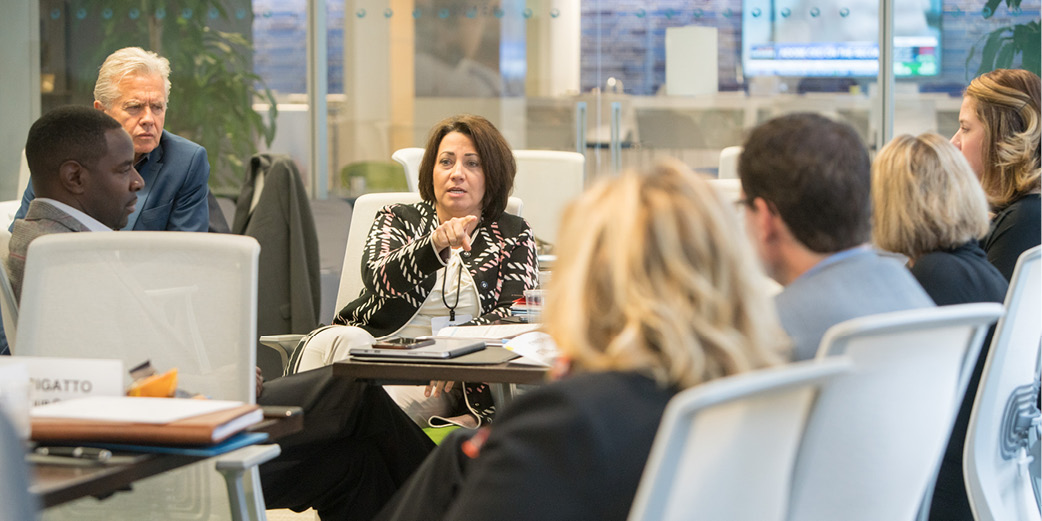
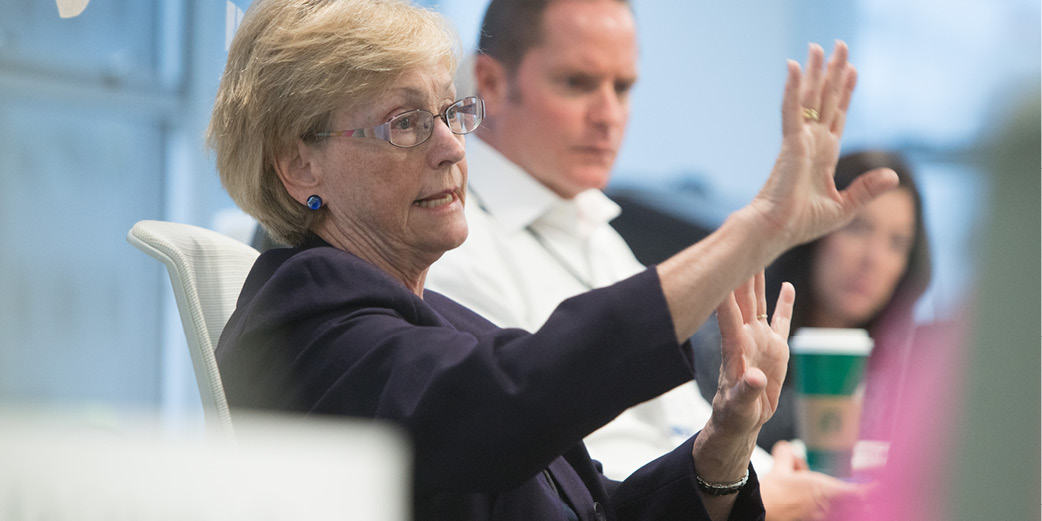
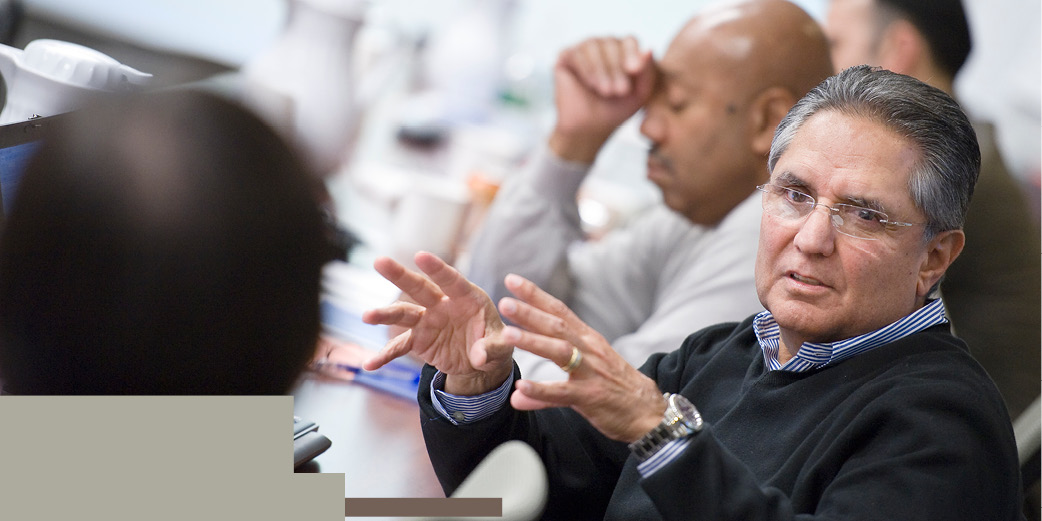
Companies are increasingly focused on employee performance, which is challenging but also gives CHROs and CFOs an opportunity to collaborate. How can these key functions work together to reinforce culture, drive organizational change, and influence the CEO and board?
Join host Diana Scott and guests Henry Artalejo, SVP of global human resources at Griffith Foods, Matt Corker, EVP and chief financial officer at Griffith Foods, and Maria Colacurcio, CEO of Syndio. Find out what defines a people-first organization in 2026, how the CHRO-CFO partnership can drive culture and compensation conversations, and why AI transformation is an opportunity for HR to rebrand itself.
This special episode was recorded on June 3 at the 2026 CHRO Summit, hosted by The Conference Board in Chicago.
For more from The Conference Board:
Join experts from The Conference Board as they share Trusted Insights for What’s Ahead®
C-Suite Perspectives is a series hosted by our President & CEO, Steve Odland. This weekly conversation takes an objective, data-driven look at a range of business topics aimed at executives. Listeners will come away with what The Conference Board does best: Trusted Insights for What’s Ahead®.
C-Suite Perspectives provides unique insights for C-Suite executives on timely topics that matter most to businesses as selected by The Conference Board. If you would like to suggest a guest for the podcast series, please email csuite.perspectives@conference-board.org. Note: As a non-profit organization under 501(c)(3) of the IRS Code, The Conference Board cannot promote or offer marketing opportunities to for-profit entities.
Diana Scott: [00:00:00] I'm really excited to talk about this today with this very distinguished panel, because as we try to create what we like to call a people-first organization, that partnership becomes ever more important. I'll ask my panelists to introduce themselves.
Henry Artalejo: First and foremost, thank you for being here, and thank you for staying for the last session. It's always hard to be the last act, if you will. I'm Henry Artalejo. I lead the HR function for Griffith Foods. Griffith Foods is purpose-led, and I think we—I heard purpose a lot today, but we introduced purpose back in 2013, so almost pioneers to the purpose wave that seems to be going on. Global product development food company. We're located here in Chicago. We have 5,000 employees and about $1.5 billion in sales.
Matt Corker: All right. Matt Corker, global CFO for Griffith Foods. It's a pleasure to be here. I think HR executives [00:01:00] inviting finance to the discussion is tricky. But excited to talk with you all today.
Maria Colacurcio: Hi, everybody. I'm Maria Colacurcio. I'm the CEO of Syndio. We serve almost 400 enterprise customers. We are a decision intelligence company focused on pay governance. So we sit really squarely within these two gentlemen in terms of the conversations that are going on between HR and finance. And just really pleased to be here. Thanks for having me.
Diana Scott: We talk about this relationship, and we have a CHRO and a CFO here on stage that spend a lot of time together. They partner together very well, which is why they're actually up here. And Maria actually works with a lot of companies and has incredible perspective because of the work that she does with many companies and boards.
So we have her perspective across a number of different industries that we also want her to add in today. That's why they're all three here up on the stage. But I want to start with just a very [00:02:00] basic question, because, the CHRO role has really evolved significantly in the recent years.
I guess I want to ask you to just comment on how do you think that has changed the relationship between HR and finance and actually the CEO, as well. And perhaps even comment on the board, if you care to. And I'm going to start with you, Henry. Because you are the CHRO, and this is a room full of CHROs.
Henry Artalejo: Yeah. No. Look, I think that you start by what are the things you have in common, and at the end of the day, both Matt and I are leading the business through a transformation of its own, so we have a shared business objective to start with. And then comes into our profiles. We both are newer, external members to the leadership team in an organization that is 106 years old and a management team that has been in there for a long time.
And so we are, in essence, elements of the [00:03:00] change wave, even though we've been there, and I'm coming up on seven years, Matt is five. That's change for us. We're the new blood, right? And so the relationship is critical because throughout this week, we've been talking about the role of the chief HRO, and we don't use that term at Griffith, but the role of HR can be lonely. And we take pride, and we take solace, and we have this peer group to share stories with.
But in our world, both of our roles can be quite lonely. And so for us, having each other to support on topics that are difficult is crucial, right? And we have to hit the note on a day that we are balancing each other, because if we hit the note on a day that we're both down, that's going to suck.
But we talk about everything. We talk about where the business is going. We're talking about the people challenges that we have across the enterprise, but in our own functions. Currently, we are both in different stages of development, working on our operating [00:04:00] models. So there's a lot of people work inside our functions and across the enterprise.
And then ultimately, the work that we're doing requires influencing our CEO, influencing our executive chairman, who's the owner, and then keeping the board informed, in our case. Our board operates a little bit different than publicly traded companies, if you will. And so those are all layers.
We need to scheme together 'cause you don't want to gang up on our CEO. We've done that, and it's backfired.
Diana Scott: And Matt, you have more than just the CFO role. Can you talk a little bit about that? He has a very interesting role, and it is huge.
Matt Corker: Yeah, it's a privilege, but it is large. So I have the responsibility for certainly global finance, but also legal and, at least temporarily, for IT, as well. So, from a finance perspective, that's, that's a lot of people. That's a lot of talent within the organization.
And within finance, we're always focused on the agility to focus on what matters for the [00:05:00] business at any point in time. Certainly in the near term, but also the long term, as well. And as we're measuring workforce capabilities up against the challenges that we have, that's a pretty tall task.
And so, you know, in finance, we find comfort in facts, right? Data, informed decision-making, and to do that across a wide scale of people, over 5,500 employees across the world, and constantly balancing where we are versus where we expect to be. I was just in a conversation this morning with our chairman and our CEO about a particular business opportunity, and we immediately went to, do we have the right skills in the right places to make this successful or not?
And so I find it a unique position, but also a capability-building position to partner with our HR colleagues and to partner with Henry and his team to make sure that we not only have what we need now, but we're constantly assessing the pipeline across what we see coming to be able to capitalize on those different opportunities.
Diana Scott: [00:06:00] And Maria, do you see with their clients that this role has significantly changed in the relationship. Do you see the relationships change?
Maria Colacurcio: We do. So across our enterprise clients that look very much like your organization, we're seeing the CHRO step into almost a CHFO role and trying to bridge that gap. And the area where we see the gap being bridged first, it's not the only area, but of total operating spend, about 50% to 70% of that for an organization is compensation.
So when you look at compensation, it's not a vocabulary gap, it's a visibility gap. And so we see them bridging that with shared data and starting to bring a language together that can help explain what is this large operating line item, and how can we start to get more predictable with it? And that's where we're seeing this gap come together in terms of CHROs showing up with the right metrics and data that really helps them speak finance, and I think it's been very, very productive for our customers where they've leaned into it like that.
Diana Scott: That's really interesting that you say that because, I mean, you often hear that [00:07:00] finance and HR speak different languages. But you're kind of saying, well, one way to bridge the gap is to say, "No, actually, you don't," because you're both dealing with the biggest spend in a company. What do you guys think?
Maria Colacurcio: Exactly.
Diana Scott: Do you speak different languages?
Henry Artalejo: I think we do at times, but we've done two things as an HR function. One, there's a great dependency to Matt and his team to upskill our HR function around our finance knowledge. And so there isn't a HR town hall that I've hosted over the last six years where finance has not played a role in letting us know how the business is doing and, more specifically, what can we do to help our bottom line.
So there is an element of responsibility around that. And at the end of the day, I go back to the fact because we have a sure business objective of what we want to do, I think we learn from each other. It's more complementary than it is different. We sometimes view it from different [00:08:00] perspectives, and it works out. So I think the language might be different, but the outcome that we're trying to get to is the same, so we work through it.
Matt Corker: Yeah, there's some truth to it, for sure. Finance, we tend to focus more on business outcomes, probabilities, how to mitigate risks and accelerate opportunities. HR balances us in that language with culture, pace. The measure twice, cut once approach works very well, and that's something that we learn from our HR colleagues.
Finance, at least at Griffith Foods, and I know many other companies, tends to drive consistent change. And change in any organization causes angst often, especially when not managed well. But doing that as a partnership with the HR function at Griffith Foods, I've found to be much more effective, certainly from a change management perspective, but also from a communication perspective. How are we as leaders supporting the organization through that change?
Diana Scott: Sure, I'd love to dive [00:09:00] into that a little bit because there is often a lot of tension when you're going through massive change like you are right now. Between driving that change and preserving that culture when you need to deliver results, which I know you have to. Can you talk a little bit more about that?
Are you going to be hard driving for results? Are you going to be trying to preserve the culture? Or are you going to be doing both?
Henry Artalejo: I think that actually, they're not mutually exclusive. So, I think what we tried to do is we came in to drive change. So let's start with that premise as a shared objective. We know we need to raise the bar. You don't need to compromise in talent. We need to stretch our people to do more. So in that sense, it's a complementary game plan.
And I think at the end of the day, one of the things that Matt does really well, and I think this has been really helpful, right? First of all, he was my first successful internal succession. So for those of you that think about those leaders that you hire, like the [00:10:00] first leader that you hire on the job, you always remember. You almost have like a soft spot for that person 'cause it was your first hire. So he's a testament that we can do internal succession to the C-Suite.
So I take great pride in that. But one of the things that I think enables a lot, and we haven't talked about it, is trust. And so the reason why we can get through a lot of the difficult discussions, where we see it differently and we learn from each other, is that we have invested time in building trust, which sometimes takes you outside of the business context, right?
It's understanding our family situation. It's understanding our personal health challenges. It's that shared experience that has enabled us to be prepared when we got a decision that we're not looking at it from the same perspective. So I think yeah, I think we're kind of on the same page, and if we're not, we're happy to wrestle it out.
Diana Scott: Do you find yourself, [00:11:00] though, I think organizations do have to have to find that balance between culture, performance. How do you address that, though?
Henry Artalejo: You know, one of the things that we did, and we've talked about values throughout the day here today, when Matt and I came into the organization, our value proposition was a value. It was well understood. It was briefly one sentence. And we took a step back and redefined—same values, 'cause you want to nod to legacy. The worst thing that you can do as people coming to the outside to an organization with our legacy is to not honor the past, right? We could be super-honest about the current situation, and we're definitely hopeful about the future, but our role was to, like, let's lean into the things that work, and then with modern intentionality, build out our value and our value behaviors.
And that has helped us articulate to the entire organization, regardless of level, of what our expectations are [00:12:00] in an environment that is people-first to begin with, because we have been historically always super-kind to our people. And you don't have to give that up as you're raising the bar and driving for performance. What you want to do is be very intentional and double down on clarity, which we talked about today.
Diana Scott: Now Maria, I want to bring you into the conversation because you work with a lot of organizations, and we talked a lot about people-first today, and we've talked a lot about this balance between culture, accountability, transformation. So what are you seeing with your clients in terms of how do you achieve that balance and what are some of the key factors that you look for and that you see with them?
Maria Colacurcio: So to be just a little bit provocative, I think the CHROs that are understanding that AI transformation gives you an opportunity to harness your brand as a leader in a different way. And to move away from, yes, culture is very important. But culture is something that when the organization [00:13:00] is in a time of crisis or in a time of great success, and folks are looking at the bottom line, and they're looking at revenue driving or they're looking at burn, it is not the conversation that rises to the top of the priority list.
And what AI transformation offers CHROs is to come into the room at any stage of the organization and own the room at the same level of importance and priority as the people who have metrics in their hands talking about the bottom line. And what I mean by that is, even if you go to our initial example of compensation, the CFO deeply understands the merit process. What are the distributions? What does the allocation look like? What is the impact going to be? What are the headcount budgets? What are the functions thinking about headcount growth? What are the functions thinking about the levers that they have to impact both what you spend and what you save?
And what AI transformation offers now is for the CHRO to go in and say, "OK, but now we can tie what our pay premiums are to actual talent transformation and get more predictive." So we can actually go to the CTO and say, [00:14:00] "We actually recommend that you hire 10 higher-paid AI ML engineers versus 100 of these back-end engineers."
You start to get very predictive and smart and be able to show up with analytics that can show the connection between those merit distributions and things like attrition and what the onboarding costs are. So it's really a moment, I think, where CHROs get to move away from that culture orientation, which is still very important, but layer that under a metrics front end, if you will. Like, you get to go in with those same metrics in your hand that are going to have the same priority as everything else in that C-Suite room.
Diana Scott: So we're talking about measuring culture or having metrics around culture.
Maria Colacurcio: Absolutely, and starting to predict, what are the premiums in my organization that are actually going to result in business outcomes, that are going to result in better performance reviews, less attrition? All the things that are [00:15:00] emblematic of a great culture, we can now measure, which I think is an awesome opportunity to up-level the function overall.
Diana Scott: Yeah. Yeah. And it certainly satisfies the CFOs of the world.
Matt Corker: It does.
Diana Scott: Who love metrics.
Matt Corker: Yes. Yeah, I think, there's a cost to standing behind a purpose-driven culture. And I always tell people that culture can be a crutch, as well. And so how do you protect what it is and how it's made Griffith Foods what it is today, and what it's capable of being in the future, but not let it be used in ways that prevents continued transformation and change?
And so as we move forward at Griffith, constantly measuring, I know the word accountability has come up, holding ourselves accountable for protecting, as I said, what made us who we are. But evolving into who we're capable of being, who our competitors are being, and ultimately what's going to protect Griffith for the next 106 years. That's a big responsibility, and we're still [00:16:00] fairly young on the data journey and the technology journey, but it'll be a big part of how we move forward.
Henry Artalejo: Diana, I was just going to add, I think there's a trend, and it's not a judgment in any way, but I'm being really hesitant every time the CEO has asked me and say, "Hey, do you want to change the name of the function?" And there's a trend to say people and culture, and we are all, at our firm, very hesitant to do that. Because culture is owned at a broader level of leadership, and if you park it in my title, it's going to be like HR's problem.
And so there's an element that we've been super-hesitant, and there's a trend, right? I'm like, "You know what? I'm not there yet," 'cause I want our CEO to lead owning the culture and us enable his success. Broader leadership owning culture, I can't do it by myself. So we've been very hesitant with how we play with culture, who owns it.
Maria Colacurcio: I think that's so smart. When I spent many years at Starbucks, and Howard Schultz used to always say, "There's no [00:17:00] department of respect and dignity. It's just in our ethos and how we treat each other." How would it feel if we had the Department of Respect and Dignity, and they're responsible to ensure we treat each other with respect and dignity? It doesn't make sense.
Henry Artalejo: No, and it's a pull on DEI, 'cause I've had this discussion with our CEO, as well, and he says like, when we were trying to determine where does DEI sit and should we have a dedicated resource, he goes, "It's everyone's responsibility." So he opened the door. And I'm going to kick it through. But that's a shared—yeah, it's the same mindset
Diana Scott: Turn a little bit towards performance and how that fits in with this concept of people-first culture. Some people say, "Oh, if you're, you know, Griffith, then you're..." You talked about it initially when you got there, you're a nice culture. But nice doesn't necessarily equate to performance. And you don't necessarily want to be nice. You don't want to be a nice culture. You want to be a performing culture, and you can be still very kind, right? And we [00:18:00] talked about the difference between that.
But how do you get to a high-performance culture when you're also a people-first culture? And what does that look like? And how do you talk to your people about that so they can actually understand that and hold that accountability? 'Cause I think you've done a really good job of making that shift from nice to kind and performance-oriented.
Henry Artalejo: I think we're on the journey. I think this is one where I have to admit, I believe in coming in and actually identifying what is the talent philosophy, and a talent philosophy gives you some anchors, and those you can share with everyone in the organization.
And there's five elements to that. You want to be very clear and intentional what you expect people to do, how they're supposed to behave, and then leaning to the fact that you're going to differentiate, which talks about performance and contribution. You're going to hold people accountable, which we're on our journey. We're not 100% there, but if you want the title of manager, you got [00:19:00] to manage to that title. And the last one is transparency, and that's a journey that we're on because there's been a lot of hesitation in being super-transparent.
Where Matt and I come from, it's like, you want the transparency, you want the regions competing with each other, you want to let one region know that they brought you down, and people are not getting the bonus that they wanted because you didn't perform. Now, that's too rough for our environment. But we would be there. That's where we need to balance each other out 'cause we would be like, "Lean into that." But that has helped in driving performance because you can have and walk through that discussion very easily with any employee in the organization.
Right.
Diana Scott: So people-first, performance-driven. They're not counter to one another.
Henry Artalejo: Don't have to be.
Matt Corker: Yeah. It's also balancing, as we talk about kind of the future at Griffith, it's always about the enterprise perspective. So there are two important variables into enterprise success.
They're, Henry used the word, they're not mutually [00:20:00] exclusive, earlier on a different topic. It's the same. Of course, I'm going to lead with performance on the majority of things that I engage with the organization on, but it's helping the organization understand how performance is impacting our ability to do the things that we committed to as an organization.
It's not just my commitment or Henry's commitment or CEO or our chairman. It's the organizational shared commitment for what success looks like moving forward. And so tying that back so people can clearly understand, this went well, and that enabled this outcome. This didn't go as we'd hoped, and this is therefore what we have to do differently. I think constantly balancing that back to a common purpose and a common enterprise goal has worked really well for us.
Diana Scott: Can you tie that back into the reward structure?
Matt Corker: Absolutely
Diana Scott: So they actually understand it?
Matt Corker: Yes. We have two components of our reward structure. One is the what, right? What do we do? And the second is the how. And so when we look at our values and [00:21:00] what is important to Griffith from a shared values perspective, there's a significant weighting in terms of how you show those values and how you deliver what you deliver.
And so for us, that's very important. I'll admit, we don't always get that measurement right in terms of are we accepting of certain values relative to the what and the performance and the growth? Or do we hold ourselves accountable to doing what we say and making choices, sometimes difficult choices, to show that the balance matters? And that when we get that equation right, it has a significant impact on our success.
Henry Artalejo: Diana, one thing that I will add, one of the challenges that we've gotten from our chairman, Matt has done a really nice job in trying to define. Because our performance is just not business result. We also have this whole area of impact metrics, so what is the positive impact that we're having on the world in a number of different categories, which is not so easy to measure. And so our ability to define [00:22:00] recognition in our programs through the lens of both performance and impact metrics.
Our organization is not the one that's going to say, "Hey, by 2030, we're going to be triple the size of what we are." The primary driver for our owner is really, are we having the impact that we would like as we're trying to nourish the world? So it's a very different proposition, which, it's just an alternative way to look at the contribution that you make to the world. We perform well, and so in that sense, people are compensated fairly, but we have greater aspirations that are very hard to measure.
Matt Corker: They are, but it's part of what we think differentiates us. Certainly, that's what we tell our sales teams to do when they're out in the market selling our products. But it is, it's a challenge. It's another cost. But the benefits that we're able to portray to our team members across the world, to our customers, to the communities we serve [00:23:00] across the world, we feel like that's something that's going to pay dividends in the long term, not just in the short term. It's a long build to be able to drive both financial well-being, as well as aspirational impact. But we're confident that from a reward structure standpoint and from a purpose standpoint, it's an anchor of our future success.
Diana Scott: So Maria, when you think about what they're talking about in the context of your larger experience working with others, how does this fit in with that?
Maria Colacurcio: Well, I'm curious to ask all of you a question, if you're game. Last session of the day. How many of you have performance reviews of some sort, numerical, etc.? Just raise your hand. OK. Now keep your hand up. If you tie it to comp, I don't care if it's base or bonus, just some sort of pay, keep your hand up. OK. And now, keep your hands up, how many of you have reintroduced these over, let's say, the past 12 months? Keep your hands up.
So that is a trend I am seeing. Performance [00:24:00] reviews are back. So many of you kept your hands up, it was probably about 65% who have performance reviews. It's within the last 12 months they've been reintroduced. And there's a big reason for that. Companies are striving to be more performance-oriented, and they're taking a much harder scrutiny and line against, what are the business outcomes?
And when you think about this at the very beginning, what does a company value? This is where transparency comes in and engagement. People want to understand why they're paid what they're paid. And many companies are trying to get more articulate about this for a couple of reasons. Number one, they're trying to drive more of a performance culture, and transparency is proven to do that. Number two, they're up against global companies. Many, many pay transparency laws in Europe and the EU PTD that are requiring them to be very clear on why they pay what they pay.
So performance is really interesting because your teams are spending all this intentional effort at the beginning of the year, in your annual operating plan, to [00:25:00] think about the pay policies, the strategy, your philosophies. What do you value? Why do you pay what you pay? What are those performance indicators? And then it goes out into the Wild West of execution, and it's all lost. Your strategy is not carried forth in conversations where a new offer is being made and someone's a really tough negotiator, and that manager just has to have that special snowflake, which creates compression in another area of the organization or opens up a pay gap that you're going to have to report on in the UK.
You've got promotion conversations, you've got transfers, you've got the merit conversation. So pay governance is such a key part because you've got to stay consistent across the things that you say you value, why you pay what you pay, the premiums that you're setting out when you start the conversation with the candidate before they're an employee, and then what values get promoted, what values achieve the five on a scale of zero to five.
And so I think that's another area where technology can really help us [00:26:00] be more consistent, not only to identify what are the right premiums in our organization and are we paying for the things we say we care about, but also, did those premiums play out? So if you paid a premium because someone came from Google or Meta, and they're a competitor of yours, did that employee actually deliver higher business results six months later, or did they get terrible peer reviews, and they actually had higher attrition, and they had bad performance scores? Now you know that premium probably wasn't worth it.
And that's the closed loop that really enables companies to be pay for performance because they can figure out what do we value, does it work, and can we make sure we're consistent in actually following through with that when we promote and pay people?
Diana Scott: So this is where, when you start to think about AI and this whole transformation and how you evolve these workforce expectations. This is where the partnership between the CHRO, the CFO, and the CIO becomes [00:27:00] really important. Because now you're starting to think about how these technologies can actually really help you in thinking about your workforce and the transformation, and how you really evolve your people-first organization and think about your reward structure and your workforce needs.
So that's a very interesting concept. I want to leave a little time for some questions from the audience, so I just want to ask one final thing. So, I want to get back to the partnership. So if you could say one thing about what leaders can do to strengthen this partnership and alignment across the C-Suite? What would that be?
So we'll start with you, Henry. What does it take?
Henry Artalejo: I would say build the relationships early. Invest so that you can have the more difficult conversations when they arise. Whatever you want to do, whether you do it at work or outside of work, that might be part of your culture that dictates that. But establishing trust, it's never too late to do that as early as you can.
Diana Scott: OK. [00:28:00] Early. Build it early, and build trust early. That's what I'm hearing.
Matt Corker: Correct.
Diana Scott: OK. Matt?
Matt Corker: Yeah. I think for me, and I know this sounds a little bit cliché, but it's being consistently courageous in the right conversations. So I give Henry a lot of credit. In very difficult business conversations sometimes, and great business conversations, the ability to step up and constantly balance, are we bringing the right aspects of details into the conversation from a people perspective, from an HR perspective?
That can be unpopular at times, but it's certainly something that I gravitate towards because finance is more comfortable being the least popular person in the room. But seeing that from a colleague and understanding that we can take that together, as a shared opportunity, has been very, very helpful for us.
Diana Scott: So I'm hearing honesty and courage.
Maria.
Maria Colacurcio: I think to kind of tie it with a bow in terms of the board, which we didn't talk much about the board, but the partnerships that I've seen really successful between the CHRO and [00:29:00] CFO is when they actually tackle board conversations almost as a—I do this with my kids all the time—like find a common enemy, and then they all start getting along with each other. Like, I'll be the common enemy if it means you'll get along.
But come up with a board conversation that really requires that deep partnership. And oftentimes that's something that needs to be at the level of the comp committee or the audit committee, that can create that shared understanding of the metrics, both from the people side and the finance side.
Diana Scott: Thank you so much. We have a few minutes for questions, if you have any questions out there. Who has a question?
Q&A: Hi, Matt Rosenbaum with The Conference Board. You were talking, Henry, about your opinions of the view of treating culture as something a department owns. But it stood out to me that many of the things we've been talking about all day, especially AI, there are chief executive, chief AI officers or people that own that. There are chief digital officers. But ideally, those things are going to suffuse the organization the same way that culture is owned.
So I wanted to see from your [00:30:00] perspective, all three of you, what are some of the things that should be owned by a specific department or a specific function, versus this is spread throughout the organization, and everyone should be participating in it?
Henry Artalejo: I wish I had one answer for you, and that's going to be so specific to the organization in my point of view. I can speak about Griffith, and one of the things that I found encouraging, and I say encouraging because at first I was a little bit judgy. You know, we're HR people, we're judgy. And as our CEO stepped up to really drive the AI strategy—and now, it gave me pause—'cause he could be a little bit of a micromanager, so I'm like, "Oh, God, he's going to control this."
But I think it sends a very different message to the organization when it is something that is that important that we need to take our time, think it through, and not necessarily be the first. And in our organization, we all wear a little bit of multiple hats. So right now, clearly, he's wearing a couple hats.
But we haven't [00:31:00] created an AI czar, right? We have a steerco that is guiding, very much like what you heard throughout the week. We have a three-tier strategy around AI. We haven't necessarily broadcasted it. We're thinking on how do we share that with our employee base. There's some things that would be enable our purpose, enable our 2030 aspirations, and would be a competitive advantage, so that's the main driver.
Second, would be where can you use AI at a functional level, and that depends on, do I have all the building blocks? Is my data correct? Have I worked through all my systems implementation, and are my processes clean so that I can add AI? And the last one is, look, everybody's using it, so you might as well try to educate to get the most out of it.
I think the most inspiring piece that we've come up with on the AI side is that we said, "Look, at the end of the day, our game is all about augmentation, so let's just call it for what it is." And we do feel that if humans, they use AI, and they use [00:32:00] AI well, they will outpace or replace those who don't.
And that's kind of the direction that the steerco and our CEO have come up with, and that I think is resonating. But we're laggards. We're not on the front end, and it's not a dedicated, it's a multi-hat sort of cross-function ownership, if you will.
Maria Colacurcio: I think it's really the difference between inception, administration, and adoption.
So when you think about AI or culture, certainly there can be a group that's responsible for the administration of the all-company meeting or the events or the functional meetups or things that drive culture. But you have to find those individuals that are culture carriers within each functional group, and it's the same for AI.
The best AI adoption happens when someone in an organization or in a function is tapped by a leader because they've done something really innovative, and they share it with their peers. That's when it becomes an adoptive technique. I think it's the same with culture, finding those culture carriers and champions, and you can find them really easily. [00:33:00] They're the ones who are excited and passionate about bringing their peers together and colleagues together in a way that celebrates some aspect of the company's values and behaviors.
So I think there is an aspect of administration or inception of a program or a programmatic aspect, but then it's the adoption is really inherent upon the leaders identifying who the folks are in the organization that are going to carry that forward.
Diana Scott: Great. And I think that's a mic drop.
Maria Colacurcio: Thank you.
Diana Scott: That was great. And thank you so much to all of our panelists: Henry, Matt, Maria.
Maria Colacurcio: Thank you.
Matt Corker: Thank you very much.
C-Suite Perspectives / 08 Oct 2026
Learn how customer empathy informs strategy, why CEOs must be willing to say no, and how authenticity can help employees understand difficult decisions.
C-Suite Perspectives / 05 Oct 2026
No CEO can personally master every technological, geopolitical, and economic challenge confronting a modern organization.
C-Suite Perspectives / 02 Oct 2026
US salary increase budgets are projected to remain at 3.5% in 2027, unchanged from 2026.
C-Suite Perspectives / 01 Oct 2026
In this episode of C-Suite Perspectives we discuss how boards can identify strategic errors before they threaten the future of the company.
C-Suite Perspectives / 29 Sep 2026
US Consumer Confidence fell to 81.9 in September, marking a third consecutive monthly decline.
C-Suite Perspectives / 28 Sep 2026
Kathy Mazzarella reflects on joining the company at 19, rising through roles to become CEO, and the defining experiences that prepared her to lead.