15 September 2026 / Report
 Email
Email Linkedin
 Facebook
 X
X Copy Link
Policy Watch explores relevant topics where business meets US domestic policy.
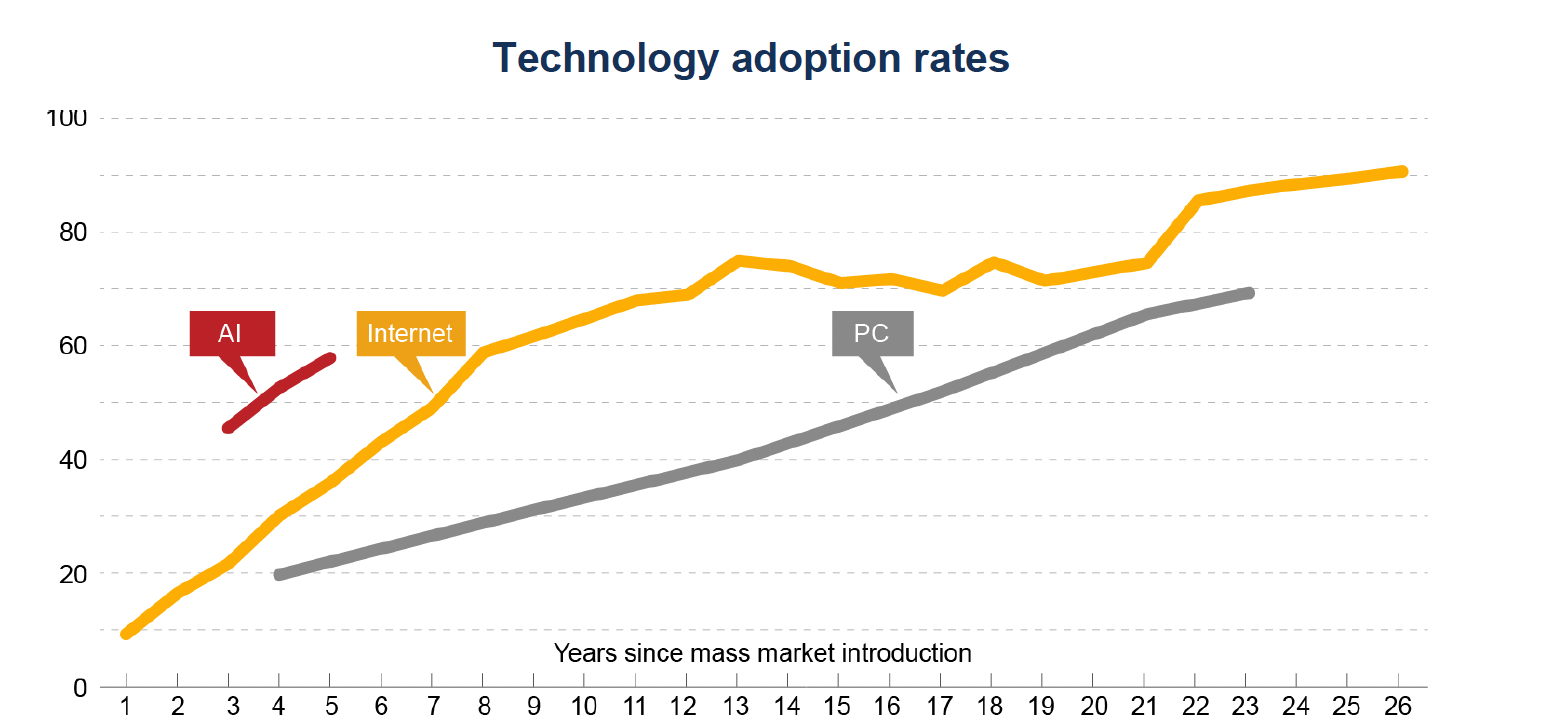
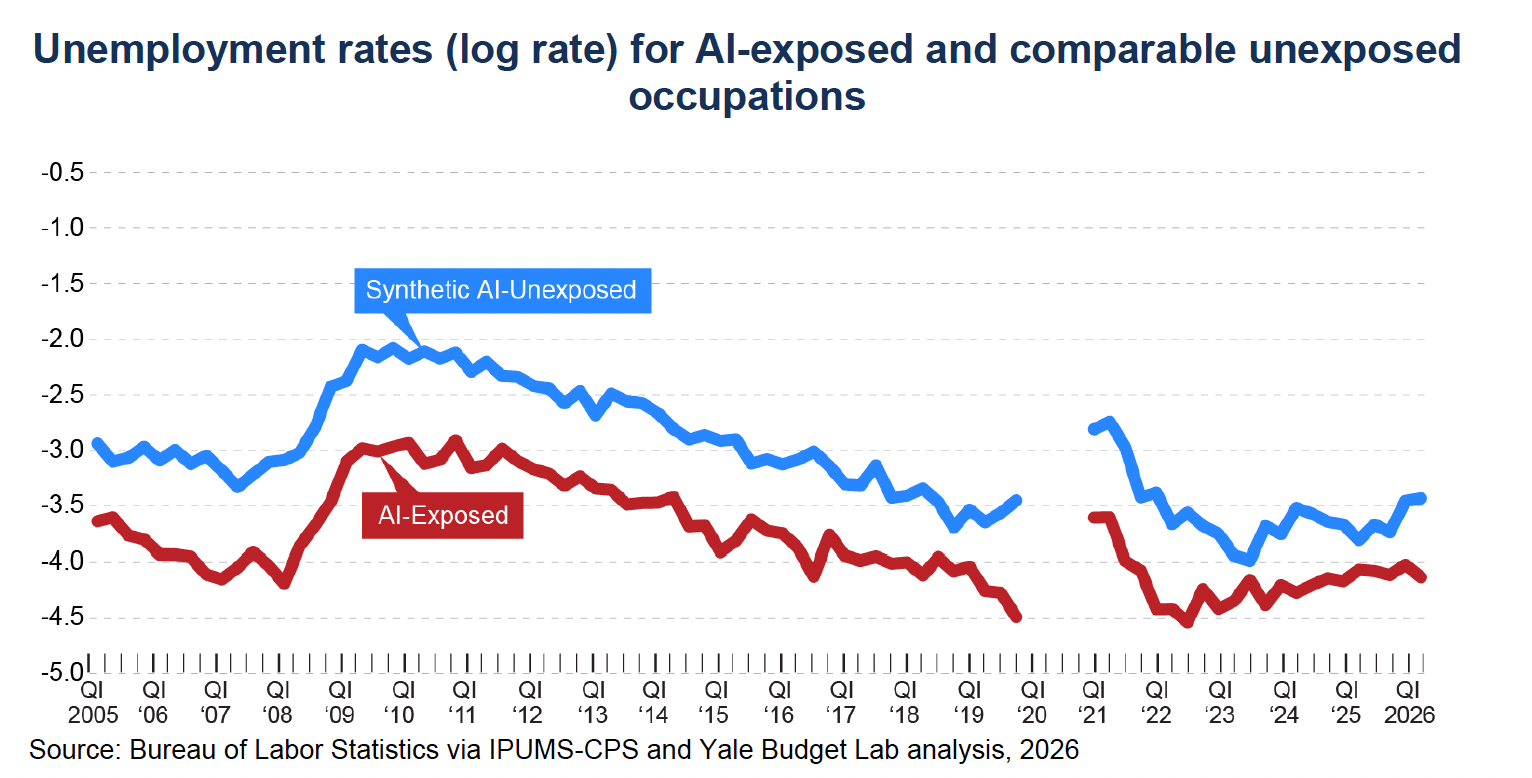
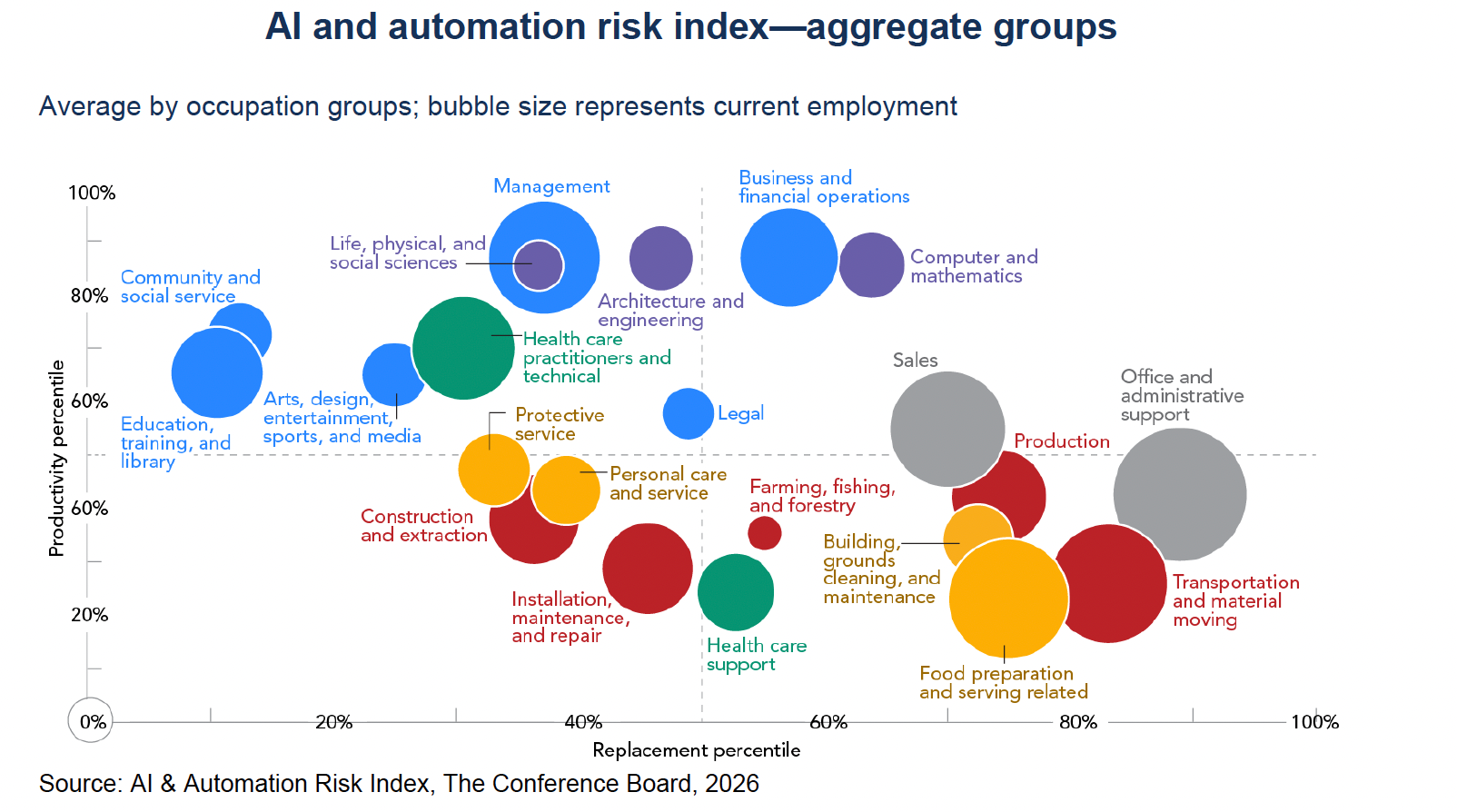
learn moreAI is spreading through US workplaces more quickly than previous technologies, yet its effects on productivity, employment, and wages remain difficult to discern. To help leaders navigate this uncertainty, this report examines four potential labor-force impact scenarios and identifies steps policymakers, business leaders, and educators can take to prepare for possible disruptions. While the labor market effects of AI are uncertain, waiting to take action until the outlook is clear could leave policymakers and CEOs ill-prepared to respond to quickly changing conditions. As a result, stakeholders should take steps now to prepare workers to take advantage of potential opportunities and remain resilient against potential disruptions. Improve data collection and establish early-warning indicators Recognizing that many existing datasets may not capture the effects of AI quickly or granularly enough to aid decision-making, policymakers should take steps to improve data collection. Invest in worker training and education AI will change the skills required in existing jobs, as well as the mix of occupations demanded by employers. Given the pace of change, education and training systems must become more responsive to technological advances and shifting employment conditions, requiring action from policymakers, educators, and CEOs. Modernize unemployment insurance and public-benefit systems Even a concentrated or temporary increase in displacement could strain unemployment insurance and other public-benefit programs. Policymakers should improve these systems before a major shock occurs rather than attempting to build capacity during a crisis. Reviewing a book in 1987 about the decline of US manufacturing and the potential transition to a service-driven economy, Nobel laureate Robert Solow famously stated, “You can see the computer age everywhere but in the productivity statistics.”1 His statement represented what was then a popular position in a highly contentious debate about the impact that computers would have on the economy—a debate that was later answered as productivity growth increased in the late 1990s after nearly 25 years of stagnation and the computer and internet revolutionized workplaces.2 This statement—now commonly known as the Solow Paradox—has received renewed attention as AI-related invested is projected to exceed $1 trillion in 2026, excitement about potential advances in domains ranging from medicine to manufacturing, and fears about the potential impact on the labor market and economy. However, nearly four years since the public introduction of ChatGPT in November 2022, it remains unclear what labor force effects it has already had and even less clear what effects it may have in the future. You can see the AI age everywhere but in the labor statistics. This dissonance reflects the challenge of assessing the effects of a rapidly evolving technology in a dynamic economy with incomplete data.3 Economic growth and labor demand are driven by many factors, including general business cycles and policy decisions. Likewise, the integration of new technologies into the workplace depends on individual firm factors, workforce readiness, and other variables. Further compounding the challenge is that robust research takes time and studies released today often rely on economic statistics from several years ago, reflecting a different economy with older AI models that are far less capable than those currently available. Though the potential outcomes are uncertain, the stakes for business leaders, educators, and policymakers are high: major employers have warned that AI could lead to significant and permanent job reductions and prominent AI developers have likewise claimed that AI poses a potential existential threat to humanity.4,5 Notably, many experts also dispute these potential outcomes including, more recently, many who previously made them.6 Still, there is broad agreement that AI will have some effect on the workplaces and the labor market, even if the scale, timing, direction, and distribution of those effects remain uncertain. Given the stakes, it is important to consider several possible scenarios and consider their potential implications for policymakers, educators, and employers. Concerns about the impact of computer technology on employment predates contemporary AI systems. Indeed, in a notable 2003 paper, economist David Autor and coauthors studied how computerization substituted for workers in some tasks and complemented workers in others. Importantly, the researchers found that computers at that time were best suited to tasks that followed explicit rules, while humans excelled at nonroutine problem-solving and complex communication tasks.7 Advances in AI, however, have broken down the barrier limiting machines to tasks following explicit rules, motivating ongoing research into AI adoption trends, its effects on labor productivity, and employment impacts. While this research provides helpful insights into these effects, they are inherently retrospective. Rapid increases in AI capabilities, changing business integration, and evolving economic conditions constrain their ability to answer questions about current and future AI effects. As a result, these studies provide a useful foundation on which to build ongoing research rather than a conclusive answer to the fundamental economic questions raised by AI. Adoption trends By some estimates, AI is the quickest-adopted general-purpose technology in human history, with more than 1.2 billion people having used an AI tool (Figure 1).8 Figure 1 Note: The horizontal axis represents years since mass market introduction of the technology – 1981 for the PC, 1995 for the internet, and 2022 for AI. Sources: Inter-university Consortium for Political and Social Research Census Bureau Real-Time Population Survey (AI), Current Population Survey (Personal Computer), and International Telecommunication Union (Internet), 2026. Calculations by Alexander Bick, Adam Blandin, and David Deming, Federal Reserve Bank of St. Louis. Adoption in US workplaces has been similarly swift: about 18% of firms and 41% of workers reported using AI through the end of 2025, with higher adoption rates at larger firms and certain sectors such as professional services (including scientific and technical services), finance, and insurance.9 Another survey conducted in mid-2026 found that 47% of US employees say their organization has adopted AI.10 Though AI usage has been broad, certain groups have adopted the technology at higher rates, including younger workers, those with more education, and higher earners.11 There is also regional variation in AI workforce readiness, with one analysis of available talent pools, innovation infrastructure, and adoption rates finding just about one-third of US metro areas in the top tier of AI preparedness.12 Notably, adoption also appears to be highly correlated, with projections of occupational exposure to AI suggesting that the technology is diffusing fastest into jobs where it has the greatest technical capacity to reshape tasks.13 More recently, usage of AI for automation (in which users give a model a task and direct it to complete it with minimal human involvement) rather than augmentation (in which users ask a model for information and iterate on tasks) has increased.14 Productivity A 2023 analysis of the use of AI in a customer support setting found an increase of 14% in the number of issues resolved per hour. However, these gains were driven largely by novice and low-skilled workers (34% increase) with minimal impacts on experienced and highly skilled workers.15 Likewise, an experiment involving writing tasks showed that AI helped workers be more productive and improved worker satisfaction, but the biggest gains were concentrated among workers with the weakest baseline writing abilities.16 AI has also shown significant productivity gains among software developers—a 26% increase in task completion—but with higher rates of adoption and productivity gains among less-experienced developers.17 AI has also shown benefits for medical diagnosis across a wide range of specialties and could help relieve health care workforce shortages in some cases.18 Despite evidence of productivity gains in targeted contexts, research also shows its limits. A 2023 study found that giving management consultants access to AI increased the speed of task completion while also improving quality. However, it also showed that for tasks outside the frontier capability of the AI model, consultants with access to AI were 19% less likely to produce correct solutions than those without AI access.19 Another projection expects strong initial productivity growth associated with AI (as high as 0.2 percentage points annually in the 2030s), but that the effect would eventually fade by about 2045 to less than 0.04 percentage points as adoption saturates.20 For reference, total factor productivity growth was 0.8 percent in 2025.21 These findings emphasize the need for ongoing research to account for improving AI models and increasing capabilities among workers and organizations. Research from The Conference Board also highlights the need for intentional enterprise strategies to maximize AI capabilities, including reskilling and targeted learning pathways.22 Employment Impacts Data limitations, fast-evolving AI capabilities, and a dynamic economic environment make the employment effects of AI a difficult question to study.23 However, despite rapid AI adoption— and some sensational headlines to the contrary—the net effect of AI on the labor market appears, at least so far, to be muted.24 Several analyses of job trends through early 2026, for example, found no pattern associating increased job vacancies with AI exposure or evidence linking AI to a decline in aggregate labor demand (Figure 2).25 Figure 2 Source: Bureau of Labor Statistics via IPUMS-CPS and Yale Budget Lab analysis, 2026 A 2023 survey fielded by The Conference Board, for example, found that while more than half of employees reported using AI on the job, just 4% expected it to replace their job.26 In addition, an estimate of occupational exposure to AI—measured as the share of a position’s tasks that can be completed by AI—have also not increased in the last three years, even as models have become more capable.27 Other early studies have not found significant negative wage effects for workers in AI-exposed occupations and potential wage gains from AI for lower-skilled workers.28,29 However, this picture is far from conclusive, and the evidence is quickly evolving. A study using data through 2023 found that tasks with AI exposure experience reduced labor demand, although it also observed modest overall employment effects.30 Several studies have also linked occupational AI exposure to lower employment for early-career workers, though other analyses have found no effect.31,32,33 Other research has found that exposure among certain occupations—including web development, database design, and software development—has increased significantly as AI models have become more capable.34 Importantly, these trends may change as firm integration of AI evolves. Data from The Conference Board indicate that most firms are still in the “early experimentation” phase of AI maturity.35 However, as firm-level abilities increase, impacts may be more significant. Given the wide range of possibilities for AI impacts, this section considers several scenarios: Gradual augmentation One plausible scenario is that AI quickly becomes a common workplace tool with broad adoption, but productivity gains and task disruption are slower to materialize at scale. Workers may use AI to complete basic tasks including summarizing documents, analyzing data, generating code, or answering routine questions while workers review AI outputs, design prompts and workflows, and manage exceptions and fringe cases. In this way, AI integration in the workplace could resemble the adoption of other technologies such as the personal computer and the internet—first as a novel tool limited to certain roles and use cases but eventually a standard capability for most employees. Analysis from The Conference Board projects that within three years, just 15–25% of jobs in the cognitive workforce (roles centered on knowledge and information tasks rather than manual labor) will involve human-only work, whereas 60–70% of jobs will involve collaboration between humans and AI.36 In this scenario, AI might have minimal impact on employment levels overall or impacts would be slow to develop, a possibility that some experts have described as “AI as normal technology.”37 However, AI could have targeted impacts on the task composition of certain roles and the employment prospects of some workers. For example, those who struggle to use AI may experience worse employment outcomes than their peers. Likewise, early career employees whose abilities can be replaced by AI might see worse employment outcomes while demand increases for longer tenured employees capable of managing more complex tasks. Recent analysis from The Conference Board, for example, found that job postings for computer technology professionals shifted toward longer-tenured workers between 2022 and 2026.38 Aside from impacts on labor demand, AI could potentially improve employee satisfaction and retention if the technology is used to complete low-value, repetitive, or onerous tasks. For example, AI scribes and documentation tools in health care have the potential to reduce administrative burden and help clinicians spend more time on patient care. A 2025 study found that after 30 days with an ambient AI scribe, the share of participating clinicians reporting burnout fell from 52% to 39%, while participants also reported lower note-related cognitive task load, less after-hours documentation time, and greater ability to focus on patients.39 AI may also help relieve capacity constraints in certain sectors. A 2026 study from The Conference Board noted that AI tools have helped hospital systems optimize staffing allocations and improve remote patient monitoring.40 Importantly, this scenario may occur even if AI capabilities increase rapidly as many other factors—including employee capabilities, organizational policies and strategy, market dynamics, and public policy—could slow AI adoption. Even where AI can technically perform a task, firms may choose to keep humans in the loop because of risk, compliance, quality control, customer trust, liability, data security, or brand reputation concerns. In many cases, organizations may also lack the data, integrated systems, workflow discipline, and management capacity required to fully leverage AI capabilities. Concentrated gains Another possibility is that AI delivers significant productivity and employment gains, but those gains are concentrated among a relatively small share of firms, roles, and workers best positioned to capture them. The result could be a labor market with limited or moderate aggregate employment disruption but widening inequalities along certain economic fault lines, like those observed as computers remade workplaces.41 These trends have the potential to significantly remake society and create what some have described as a permanent “AI underclass”—workers, firms, and communities that are structurally excluded from the most productive parts of the economy and whose economic prospects significantly lag those in AI-augmented roles.42 Notably, these economic divisions may match existing disparities by education, geography, and demographic characteristics, but in other cases they may deviate from these patterns in surprising ways. For example, unlike previous automation waves that mostly affected middle-skill routine jobs, AI displacement risks span the income spectrum, including high-income earners and knowledge workers that largely benefited from previous technological advances.43 In addition, workers in trades or manual labor, whose wage gains have lagged those of college educated workers in recent decades, may be less directly exposed to some forms of AI disruption and could see relative gains compared to disrupted knowledge workers. For example, the Conference Board’s AI & Automation Risk Index, using Occupational Information Network (O*NET) data, estimated in 2024 that about 48% of tasks in STEM fields have high task exposure to AI, compared to just 23% of tasks in manual trades and production (Figure 3).44 Figure 3 Source: AI & Automation Risk Index, The Conference Board, 2026 Concentrated AI productivity gains may also widen regional economic disparities. One analysis of 195 US metro areas found that just 30 accounted for nearly 70% of all job postings seeking AI-related skills.45 Usage patterns of Anthropic’s Claude also show regional variation tied to dominant industries in those areas; for example, higher IT-related requests in California and document editing in Washington, DC. This can create risks for cities with dominant industries likely to face AI-related disruption and that are not positioned to capture the productivity gains, investment, and job growth associated with AI adoption. For example, Phoenix—which has a concentration of call center and back-office employment—shed nearly 24,000 customer service jobs between 2021 and 2025. Significant displacement Some experts believe that a significant majority of jobs could experience disruption because of AI, leading to labor displacement on a scale that would rival or far exceed the most severe economic shocks in US history. For example, research from OpenAI published not long after the release of ChatGPT estimated that 80% of the US workforce could have at least 10% of its tasks affected by AI and that about 20% of workers could have more than half of their tasks affected.46 Another estimate found that 25% of global employment is exposed to AI.47 Importantly, task exposure to AI may not necessarily lead to job loss if AI usage enables workers to be more productive. However, many employers have warned that AI will reduce labor demand. In a 2025 interview, for example, Anthropic’s CEO predicted that AI would eliminate half of all entry level white-collar jobs and lead to 10–20% unemployment by 2030.48 Additionally, Verizon’s CEO has stated that AI would lead to 20–30% unemployment, while a Boston Consulting Group report estimated that 10–15% of US jobs would be eliminated within five years.49,50 In this scenario, AI agents and other AI-enabled systems could complete many tasks with limited or no human intervention, sharply reducing demand for workers in a wide variety of roles and sectors. Job loss may begin with clerical and administrative support roles, certain manufacturing and production roles, transportation, and food preparation, which research from The Conference Board has found are at highest risk for replacement.51 However, displacement would eventually expand to include professional roles that have historically experienced relatively low levels of unemployment, including financial analysis, legal services, and even some medical services. Notably, some of the roles most exposed to AI disruption are higher-paying positions typically requiring advanced degrees.52 As in other scenarios, certain workers, including those early in their careers and those unable to leverage AI, may be at higher risk of job loss. The economic disruption that would follow such an event would be substantial. Increased unemployment rates would be persistent and paired with higher underemployment and lower labor force participation rates. Displaced workers who do find alternative employment may see significant earnings loss and productivity gains would be captured by a relatively small number of firms and workers. Social and political turmoil could also be substantial. Prolonged job loss is associated with wide-ranging adverse outcomes including worse physical and mental health, family instability, and increased reliance on public benefits.53 Research has also found that labor market disruptions that occurred as US manufacturing moved overseas found linkages to increased political polarization.54,55 This scenario would distinguish AI labor disruptions from those caused by earlier technological revolutions. Economic research has generally shown that technological innovation leads to increased economic activity and job growth despite negative effects on some workers and communities.56 In addition, the labor market in dynamic modern economies is continually evolving, with new types of jobs emerging as others are eliminated. For example, one analysis found that most current US jobs are in specialties introduced after 1940.57 However, in a warning of AI’s potential impacts, that analysis also found that the labor demand-reducing effects of technology have more recently increased faster than the demand-boosting effects, a trend that may be exacerbated as AI capabilities advance. Uneven disruption In a less severe—though still disruptive—scenario, AI’s labor market effects remain highly uneven across sectors and occupations. This scenario may include significant job loss in certain sectors and roles where tasks are largely completed by AI, even as job growth increases in new or existing roles that leverage AI to be more productive—perhaps resembling labor market changes resulting from past periods of technological disruption. However, even if aggregate job levels increase in this scenario, the transition could be challenging for impacted workers and communities. In one study of trade-displaced workers, only about 60% were reemployed after four years, and even those who returned to work replaced only slightly more than half of their pre-separation earnings. Likewise, recent Bureau of Labor Statistics data show that among long-tenured workers displaced in 2021–2023, about 16% were unemployed and 18% were out of the labor force in 2024. Among those who had found new positions, about 40% were earning less than they had been before being displaced.58 This transition would create challenges for both educators and business leaders. As noted in recent research from The Conference Board, business leaders would need to carefully bridge a potential generational divide between employees who are new to AI tools and those who grew up using the technology.59 It remains unclear which labor market impact scenario will unfold as AI is integrated into the workplace and the technology evolves. However, AI-related labor force impacts introduce important public policy considerations, including near-term effects on enrollment in unemployment insurance (UI) programs and public benefit programs such as Medicaid and the Supplemental Nutrition Assistance Program (SNAP), reskilling and training initiatives for displaced workers, and fiscal impacts. UI and public benefits One of the most immediate effects under any scenario resulting in job loss would be increased UI demand. Under scenarios with modest negative employment impacts, demand for unemployment benefits might resemble a traditional mild to moderate recession and not require specialized policy responses. However, Congress may still consider targeted actions for displaced workers as it has during many previous recessions, including appropriating funds to support state unemployment systems or extend the duration of benefits. Even as employment rates recover, workers would likely continue to see reduced earnings, particularly in a weak job market.60 Long-tenured workers, for example, may see the worse employment outcomes and are likely to see the largest earnings losses.61 Among long-tenured workers displaced during the pandemic, 16% were unemployed and 18% were out of the labor force by 2024. Among those reemployed full time, only 62% earned as much or more as their last job.62 Under more significant impacts—such as the concentrated gains and uneven disruption scenarios—targeted interventions may be needed to assist those in affected occupations, career stages, or regions experiencing severe shocks. For example, Congress may consider support modeled after the Trade Adjustment Assistance program that was created in 1974 to aid workers displaced due to offshoring.63 Congress may also consider basing supplemental federal funding for extended unemployment benefits on occupational displacement, regional unemployment, or earnings losses rather than state-wide unemployment rates. The potential for high and persistent joblessness has also led to calls for consideration of more novel, controversial, and potentially costly steps including providing long-term wage subsidization for displaced workers, a universal basic income, or distributing a public dividend from AI model profits.64 Decisions about how to respond to employment disruptions would have important macroeconomic effects—consumer spending, for example, drops sharply when UI benefits are exhausted.65 Notably, only about 28% of laid-off workers collect UI and the benefits only replace about 40% of their average weekly earnings, leaving a significant potential income gap for affected workers.66 Large-scale employment disruptions may also put stress on the administration of unemployment benefits. A Government Accountability Office (GAO) analysis of unemployment systems during the pandemic found that millions of workers experienced delays receiving benefits and payment errors rose from 9.2% to 18.9%.67 GAO also estimates that pandemic-era UI fraud cost between $100 billion and $135 billion, underscoring the importance of robust monitoring and audit systems during large expansions of such programs.68 Evidence from past recessions indicates that AI labor market disruption would also increase enrollment in the parts of the social safety net that sit outside UI, including Social Security, Medicare, Medicaid, and SNAP.69 One study estimates that the Great Recession induced nearly 1 million extra Social Security Disability Insurance applications and more than 400,000 extra beneficiaries between 2008 and 2012.70 Research on the impact of increased Chinese import competition on US labor markets between 1990 and 2007 also found that payments for unemployment, disability, retirement, and health care rose sharply in exposed labor markets. These effects could be persistent. For example, though the Great Recession technically ended in mid-2009, SNAP enrollment continued to increase until 2013.71 As with UI, administrative capacity at benefit agencies may be challenged; between 2019 and 2023, for example, average disability determinations slowed from 121 to 219 days on average.72 Labor market disruption could also increase burden on nongovernmental providers of aid, including charitable and religious organizations. Education and training As with previous periods of labor market disruption, many workers will seek additional education and training to improve their reemployment prospects. Evidence from previous recessions indicates that increased job loss drives enrollment in colleges at all levels, though community college and two-year college enrollments are most sensitive to labor market changes. For example, one analysis found that a one percentage point increase in the local unemployment rate raises first-time community-college enrollment by about 2%.73 However, AI may affect the labor market and educational enrollment in unusual ways that require particular attention from policymakers. Unlike previous recessions, which most severely impacted labor demand for workers with less education, AI could potentially displace large numbers of highly educated or specialized workers. This may make traditional reskilling pathways ill-suited to moving AI-displaced workers toward reemployment. In addition, institutional capacity could be a barrier to providing displaced workers access to in-demand programs. For example, research has found that while community college enrollment increases during recessions, capacity constraints in programs with higher earnings outcomes—such as technical and health care fields—divert students to programs with lower labor market returns.74 Employers will also need to carefully consider workplace training so that workers in AI-augmented roles have the opportunity to build the skills needed to remain competitive. Given the potential impacts of AI, employers and educators will need to carefully consider program design and educational content. For example, flexible programs with more generous funding have large long-term impacts on earnings.75 Programs directly affiliated with employers and that teach targeted occupational and workplace skills have also shown benefits.76 Still, given the potentially unique features of the job displacement that AI may cause, stakeholders should be prepared to experiment with different types of reskilling programs, carefully study their results, and adjust as needed.77 This may be a particular challenge as advancements in AI models’ capabilities and their use in the workplace make it difficult to develop course materials that remain current.78 Fiscal impacts Aside from the direct effects on workers, labor market disruptions would also have important broader fiscal impacts due to potential tax revenue losses paired with increased expenditures for both mandatory and discretionary programs. For example, during the first year of the Great Recession, total federal receipts fell nearly 17%, largely driven by a 20% decrease in individual income tax receipts.79 Likewise, UI benefits during the first year of the pandemic cost about $800 billion.70 Large labor force disruptions could also worsen the fiscal crisis facing Social Security. How significant these impacts are will depend, of course, on the direction and magnitude of AI’s labor market effects. If AI mostly raises worker productivity and preserves employment, tax revenue should be neutral to positive overall: more output, more taxable wages, and some increase in business receipts. However, even in a scenario with positive productivity and employment effects for some workers, lower overall labor demand may still negatively impact government budgets. Likewise, scenarios that result in widespread unemployment or disproportionate displacement of higher-earning workers could have severe impacts on the tax base at federal, state, and local levels. Workplace adoption of AI has far outpaced that of other modern technologies. However, individual productivity gains and broad labor market effects have been slower to materialize and harder to discern, reflecting the difficulty of studying a rapidly evolving technology with limited real-time data. Despite widespread concerns about largescale disruptions, the evidence to date supports neither complacency nor alarm. Rather, policymakers, educators, and employers should evaluate potential impact scenarios and prepare workers, policies, and programs to capitalize on upsides and remain resilient in the face of downsides. The enduring lesson of the Solow Paradox is that the economic effects of transformative technologies often arrive through delayed, uneven, and institution-dependent processes. AI may follow that pattern, although its speed of adoption and reach into cognitive work could make the transition faster and more disruptive than previous technological shifts. Whether AI becomes primarily a tool of widespread human augmentation or a source of concentrated economic displacement will depend not only on what the technology can do but also on the choices that businesses, educators, and policymakers make as it is deployed. Robert M. Solow, We’d Better Watch Out, The New York Times Book Review, July 12, 1987. Stephen D. Oliner and Daniel E. Sichel, The Resurgence of Growth in the Late 1990s: Is Information Technology the Story? Finance and Economics Discussion Series 2000-20, Board of Governors of the Federal Reserve System, May 2000. Ben Casselman, AI Is Reshaping the Economy. Good Luck Measuring How, The New York Times, July 2, 2026. Chip Cutter and Haley Zimmerman, CEOs Start Saying the Quiet Part Out Loud: AI Will Wipe Out Jobs, The Wall Street Journal, July 2, 2025. Cade Metz, AI Poses ‘Risk of Extinction,’ Industry Leaders Warn, The New York Times, May 30, 2023. Katherine Bindley, Big Tech Warned About AI-Driven Job Losses. Now Leaders Say Workers Will Flourish, The Wall Street Journal, July 5, 2026. David H. Autor, Frank Levy, and Richard J. Murnane, The Skill Content of Recent Technological Change: An Empirical Exploration, The Quarterly Journal of Economics, Vol. 118, No. 4, November 2003, pp. 1279–1333, doi: 10.1162/003355303322552801. Microsoft AI Economy Institute, AI Diffusion Report: Mapping Global AI Adoption and Innovation, Microsoft, 2025. Jeffrey S. Allen, Monitoring AI Adoption in the US Economy, FEDS Notes, Board of Governors of the Federal Reserve System, April 3, 2026, doi: 10.17016/2380-7172.4032. Organizational AI Adoption Jumps Six Points, Gallup, 2026. Alexander Bick, Adam Blandin, and David J. Deming, The Rapid Adoption of Generative AI, NBER Working Paper 32966 (2024), https://doi.org/10.3386/w32966. Mark Muro and Shriya Methkupally, Mapping the AI Economy: Which Regions Are Ready for the Next Technology Leap? Brookings Institution, 2025. Tyna Eloundou, Sam Manning, Pamela Mishkin, and Daniel Rock, GPTs Are GPTs: Labor Market Impact Potential of LLMs, Science, Vol. 384, No. 6702, 2024, pp. 1306–1308. Anthropic Economic Index: September 2025 Report, Anthropic, September 2025. Erik Brynjolfsson, Danielle Li, and Lindsey R. Raymond, Generative AI at Work, NBER Working Paper 31161, 2023, doi: 10.3386/w31161. Tyna Eloundou, Sam Manning, Pamela Mishkin, and Daniel Rock, GPTs Are GPTs: Labor Market Impact Potential of LLMs, Science, Vol. 384, No. 6702, 2024, pp. 1306–1308. Zheyuan Kevin Cui, Mert Demirer, Sonia Jaffe, Leon Musolff, Sida Peng, and Tobias Salz, The Effects of Generative AI on High-Skilled Work: Evidence from Three Field Experiments with Software Developers, SSRN, February 2025, doi: 10.2139/ssrn.4945566. Jinseo Jeong et al., Reducing the Workload of Medical Diagnosis Through AI: A Narrative Review, Medicine, Vol. 104, No. 6, February 7, 2025, e41470, doi: 10.1097/MD.0000000000041470. Fabrizio Dell’Acqua et al., Navigating the Jagged Technological Frontier: Field Experimental Evidence of the Effects of Artificial Intelligence on Knowledge Worker Productivity and Quality, Harvard Business School Working Paper No. 24-013, 2023. The Projected Impact of Generative AI on Future Productivity Growth, Penn Wharton Budget Model, September 8, 2025. Productivity and Costs by Industry: Manufacturing and Mining Industries, US Bureau of Labor Statistics, accessed September 1, 2026. Matt Rosenbaum, Marion Devine, and Robin Maillard, Skilling for AI: Critical Factors for Navigating AI Disruption, The Conference Board, June 8, 2026. Morgan R Frank, Yong-Yeol Ahn, Esteban Moro, AI Exposure Predicts Unemployment Risk: A New Approach to Technology-Driven Job Loss, PNAS Nexus, Volume 4, Issue 4, April 2025, pgaf107, https://doi.org/10.1093/pnasnexus/pgaf107 What We Do and Don’t Know About How AI Is Affecting the Labor Market, The Budget Lab at Yale, May 7, 2026. Do Job Postings Show Early Labor Market Effects of AI? Liberty Street Economics, Federal Reserve Bank of New York, May 2026. Molly Kinder, Martha Gimbel, Joshua Kendall, and Maddie Lee, New Data Show No AI Jobs Apocalypse—for Now, Brookings Institution, October 1, 2025. Anders Humlum and Emilie Vestergaard, Still Waters, Rapid Currents: Early Labor Market Transformation under Generative AI, NBER Working Paper 33777, 2025, doi: 10.3386/w33777. Lukas Althoff, Hugo Reichardt, Task-Specific Technical Change and Comparative Advantage, Stanford Institute for Economic Policy Research, June, 2026. Menaka Hampole, Dimitris Papanikolaou, Lawrence Schmidt, and Bryan Seegmiller, AI and the Labor Market, NBER Working Paper 33509, 2025, doi: 10.3386/w33509. Erik Brynjolfsson, Bharat Chandar, and Ruyu Chen, Canaries in the Coal Mine? Six Facts About the Recent Employment Effects of AI, Stanford Digital Economy Lab, November 2025. Peter John Lambert and Yannick Schindler, The Broken Ladder: AI, Remote Work, and Early-Career Hiring, SSRN, May 18, 2026, doi: 10.2139/ssrn.6787638. Jeffrey A. Sonnenfeld, et al, The Real Job Destruction from AI Is Hitting Before Careers Can Start, Yale Insights, May 4, 2026. International Labor Organization and NASK, Generative AI and Jobs: A Refined Global Index of Occupational Exposure, International Labor Organization, May 20, 2025. Robin Erickson, Barbara J. Lombardo, PhD, and Matthew Maloof, Reimagined Workplace 2026: Adopting AI Today, Poised for Tomorrow, The Conference Board, March 31, 2026. AI Adoption: Talent Expectations, Labor Markets Watch, The Conference Board, May 14, 2026. Arvind Narayanan and Sayash Kapoor, AI as Normal Technology, Knight First Amendment Institute at Columbia University, April 14, 2025. Jannik Schulz, The New Shape of Hiring for Computer Occupations, The Conference Board, July 15, 2026. Kristine D. Olson et al., Use of Ambient AI Scribes to Reduce Administrative Burden and Professional Burnout, JAMA Network Open, Vol. 8, No. 10, October 2, 2025, e2534976, doi: 10.1001/jamanetworkopen.2025.34976. Erka Amursi, David L. Gonzales, Catarina Dolsten, How AI Can Help Remedy the US Health Care Workforce Crisis, The Conference Board, March 24, 2026. David H. Autor, Frank Levy, and Richard J. Murnane, The Skill Content of Recent Technological Change: An Empirical Exploration, The Quarterly Journal of Economics, Vol. 118, No. 4, November 2003, pp. 1279–1333, doi: 10.1162/003355303322552801. Jasmine Sun, Silicon Valley Is Bracing for a Permanent Underclass, The New York Times, April 30, 2026. Mauro Cazzaniga et al., Gen-AI: AI and the Future of Work IMF Staff Discussion Note SDN/2024/001, International Monetary Fund, January 2024, doi: 10.5089/9798400262548.006. AI and Automation Risk Index, The Conference Board. Mark Muro and Shriya Methkupally, AI Seems Everywhere, But Regional Readiness Is Uneven, Brookings Institution, 2025. Tyna Eloundou, Sam Manning, Pamela Mishkin, and Daniel Rock, GPTs Are GPTs: An Early Look at the Labor Market Impact Potential of Large Language Models, OpenAI, March 17, 2023. International Labor Organization and NASK, Generative AI and Jobs: A Refined Global Index of Occupational Exposure, International Labor Organization, May 20, 2025. Jim VandeHei and Mike Allen, Behind the Curtain: A White-Collar Bloodbath, Axios, May 28, 2025. Chip Cutter and Patience Haggin, The CEO Preaching Straight Talk About AI and Job Losses, The Wall Street Journal, April 19, 2026. AI Will Reshape More Jobs Than It Replaces, Boston Consulting Group, 2026. AI and Automation Risk Index, The Conference Board. Mark Muro, Molly Kinder, Sifan Liu, and Xavier de Souza Briggs, Generative AI, the American Worker, and the Future of Work, Brookings Institution, October 10, 2024. Daniel Sullivan and Till von Wachter, Job Displacement and Mortality: An Analysis Using Administrative Data, The Quarterly Journal of Economics, Vol. 124, No. 3, August 2009, pp. 1265–1306. David Autor, David Dorn, Gordon Hanson, and Kaveh Majlesi, Importing Political Polarization? The Electoral Consequences of Rising Trade Exposure, American Economic Review, Vol. 110, No. 10, 2020, pp. 3139–3183, doi: 10.1257/aer.20170011. Marcus Eliason, Lost Jobs, Broken Marriages, Journal of Population Economics, Vol. 25, No. 4, 2012, pp. 1365–1397, doi: 10.1007/s00148-011-0394-4. Kerstin Hötte et al., Technology and Jobs: A Systematic Literature Review, Technological Forecasting and Social Change, Vol. 194, September 2023, 122750. David H. Autor, Caroline Chin, Anna Salomons, and Bryan Seegmiller, New Frontiers: The Origins and Content of New Work, 1940–2018, The Quarterly Journal of Economics, Vol. 139, No. 3, August 2024, pp. 1399–1465, doi: 10.1093/qje/qjae008. Worker Displacement: 2021–2023, US Bureau of Labor Statistics, August 29, 2024. Matt Rosenbaum, Matthew Maloof, HR and the Future of Generative AI, The Conference Board, December 18, 2024. Steven J. Davis and Till von Wachter, Recessions and the Cost of Job Loss, NBER Working Paper 17638, 2011, doi: 10.3386/w17638. Louis S. Jacobson, Robert J. LaLonde, and Daniel G. Sullivan, Earnings Losses of Displaced Workers, American Economic Review, Vol. 83, No. 4, September 1993, pp. 685–709. Worker Displacement: 2021–2023, US Bureau of Labor Statistics, August 29, 2024. Benjamin Collins, Trade Adjustment Assistance for Workers: Background and Current Status, Congressional Research Service, July 19, 2023. Brooke Tanner, et al, AI Growth Acceleration Versus Distributional Fairness, The Brookings Institution, May 5, 2026. Peter Ganong and Pascal Noel, Consumer Spending During Unemployment: Positive and Normative Implications, NBER Working Paper 25417, 2018, doi: 10.3386/w25417. Serdar Birinchi, et al, Unemployment Insurance Eligibility, Replacement and Takeup Rates across the US, Federal Reserve Bank of St. Louis, March 23, 2026. Unemployment Insurance: Transformation Needed to Address Program Design, Infrastructure, and Integrity Risks, US Government Accountability Office, GAO-22-105162, June 7, 2022. Unemployment Insurance: Estimated Amount of Fraud During Pandemic Likely Between $100 Billion and $135 Billion, US Government Accountability Office, GAO-23-106696, September 12, 2023. David H. Autor, David Dorn, and Gordon H. Hanson, The China Syndrome: Local Labor Market Effects of Import Competition in the US, NBER Working Paper 18054, 2012, doi: 10.3386/w18054. Nicole Maestas and Kathleen J. Mullen, The Effect of Economic Conditions on the Disability Insurance Program: Evidence from the Great Recession, NBER Retirement and Disability Research Center, Center Paper NB16-16, February 2018. SNAP Annual Summary, US Department of Agriculture, Food and Nutrition Service, accessed September 1, 2026. Disability Determination Service’s 21% Productivity Decrease and 81% Increase in Processing Times Coincided with the Loss of Key Technical Staff, Social Security Administration Office of the Inspector General, July 18, 2025. Joshua Goodman and Joseph Winkelmann, Labor Market Strength and Declining Community College Enrollment, NBER Working Paper 34498, 2025, doi: 10.3386/w34498. Diane Whitmore Schanzenbach and Sarah Turner, Limited Supply and Lagging Enrollment: Production Technologies and Enrollment Changes at Community Colleges During the Pandemic, NBER Working Paper 29639, 2022, doi: 10.3386/w29639. Jeanne Bellotti and Quinn Moore, Individual Training Accounts: Testing Models of Paying for Job Training, Mathematica. Lawrence F. Katz, Jonathan Roth, Richard Hendra, and Kelsey Schaberg, Why Do Sectoral Employment Programs Work? Lessons from WorkAdvance, NBER Working Paper 28248, 2020, doi: 10.3386/w28248. Julian Jacobs, AI Labor Displacement and the Limits of Worker Retraining, Brookings Institution, May 16, 2025. Jeffrey A. Sonnenfeld, et al, The Real Job Destruction from AI Is Hitting Before Careers Can Start, Yale Insights, May 4, 2026. Combined Statement of Receipts, Outlays, and Balances of the United States Government: Fiscal Year 2009—Receipts, US Department of the Treasury, Bureau of the Fiscal Service, 2009.Trusted Insights for What’s Ahead®
Recommendations
Introduction
Current Research on Economic Impacts
Impact Scenarios
Public Policy Impacts
Conclusion
Endnotes

AI and the Labor Force
September 15, 2026
How the Debt Impacts Americans
August 18, 2026
How the National Debt Affects All Generations of Americans
August 18, 2026
Solutions to the US Health Care Workforce Shortages
June 25, 2026
Addressing US Health Care Workforce Shortages
June 25, 2026