23 January 2023 / Brief
 Email
Email Linkedin
 Facebook
 X
X Copy Link
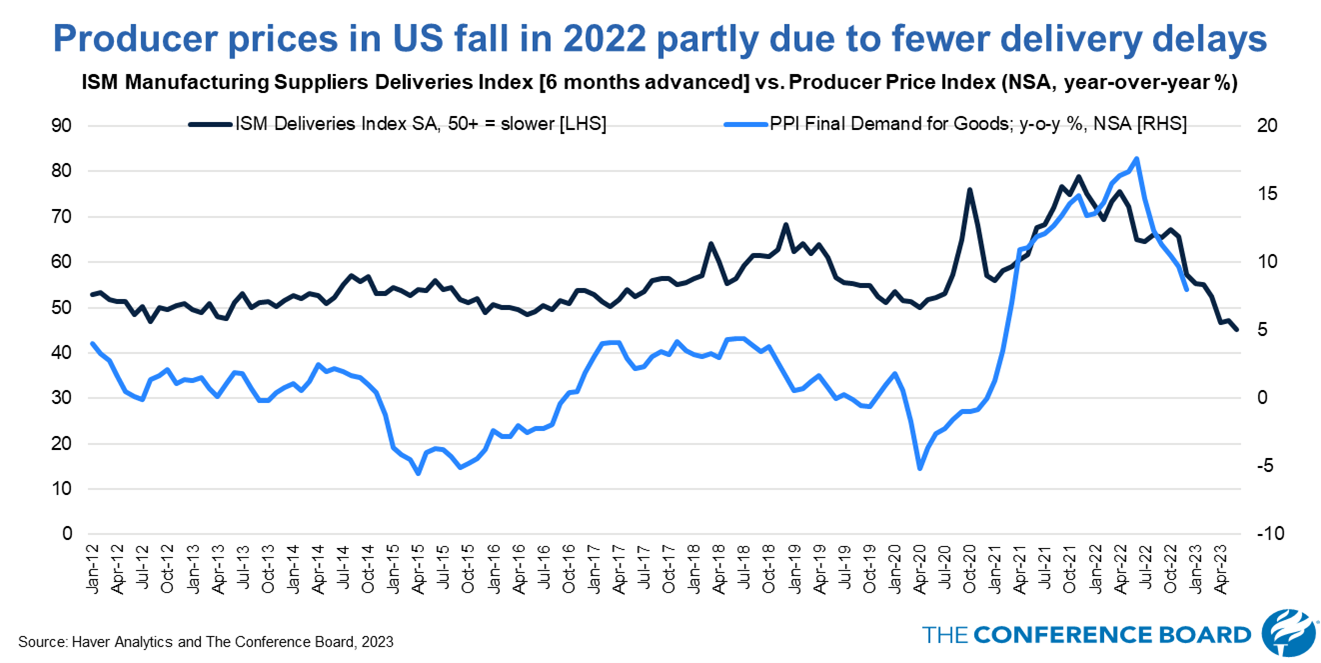
Supply chain disruptions were a main contributor to domestic inflationary pressures when they reached unprecedented peaks during the first year of the COVID-19 pandemic. The Global Container Freight Index spiked from roughly $1,500 in early 2020 to approximately $11,000 in the fall of 2021.[i] Cargo vessels experienced long delays at ports in China due to COVID lockdowns and those delays affected US ports as well. In the US, container lines had to contend with disruptions due to inefficiencies stemming from unavailable shipping vessels or vessels being inefficiently used below their available capacity.[ii] This resulted in significant delays before shippers could drop their containerized freight at either Los Angeles or Long Beach port facilities. In turn, domestic consumers experienced long wait times for goods manufactured overseas or for components needed for domestic production in the US. In recent months, however, the situation has markedly improved. US consumer demand has shifted back to services and away from goods. Partially as a result, shipping rates have fallen by more than 80 percent from their peak; some data sources even point to shipping rates being back to their pre-pandemic levels.[iii] Port congestion and delays along East and West Coast ports have been mostly resolved (Figure 1). In fact, as reported in late November, there is no longer a container vessels queue in the approach to the dual ports of Los Angeles and Long Beach.[iv] Moreover, the US ISM Manufacturing Deliveries Index, an indicator that measures if deliveries delays are improving or worsening, for December 2022 now stands at below pre-pandemic levels and wholesale prices for goods have slowed their ascent (Figure 2).[v] Figure 1 Nevertheless, some supply chain disruptions caused by crop issues, Russian sanctions, or impacts from the war in Ukraine will likely continue. Additionally, the collapse of demand in China late in 2022 and slowdown in economies around the world could also result in additional adverse impacts for the shipping industry in 2023. Historically, shipping has been sensitive to swings in economic activity, and with a global slowdown likely this year, these impacts will directly be felt by container lines and beneficial cargo owners in the US. Figure 2 Note: For the ISM Manufacturing Suppliers Deliveries Index a reading of greater than 50 indicates slower deliveries, a reading of less than 50 indicates faster deliveries. The data in the graph has been advanced by 6 months to illustrate the delay in the relationship between deliveries and producer prices. Over the coming months, we expect that the reductions in transportation prices and logistics costs will be beneficial for domestic goods prices overall. While these trends will not be significant enough to counter all inflationary pressures, especially when including prices of services, they will without a doubt provide a cushion for inflation throughout the US economy. [1][1] Freightos Data Index, https://fbx.freightos.com/ [1] Lee Bridget “Container shipping situation worsens due to congestion, delays, and empty containers” S&P Global Commodity Insights, May 30, 2022. [1] Shanghai Containerized Freight Index, https://en.sse.net.cn/indices/scfinew.jsp [1] Paul Berger “Southern California’s Container Ship Backup Ends” The Wall Street Journal, November 22, 2022. [1] ISM Report on Business, https://www.ismworld.org/supply-management-news-and-reports/reports/ism-report-on-business/pmi/december/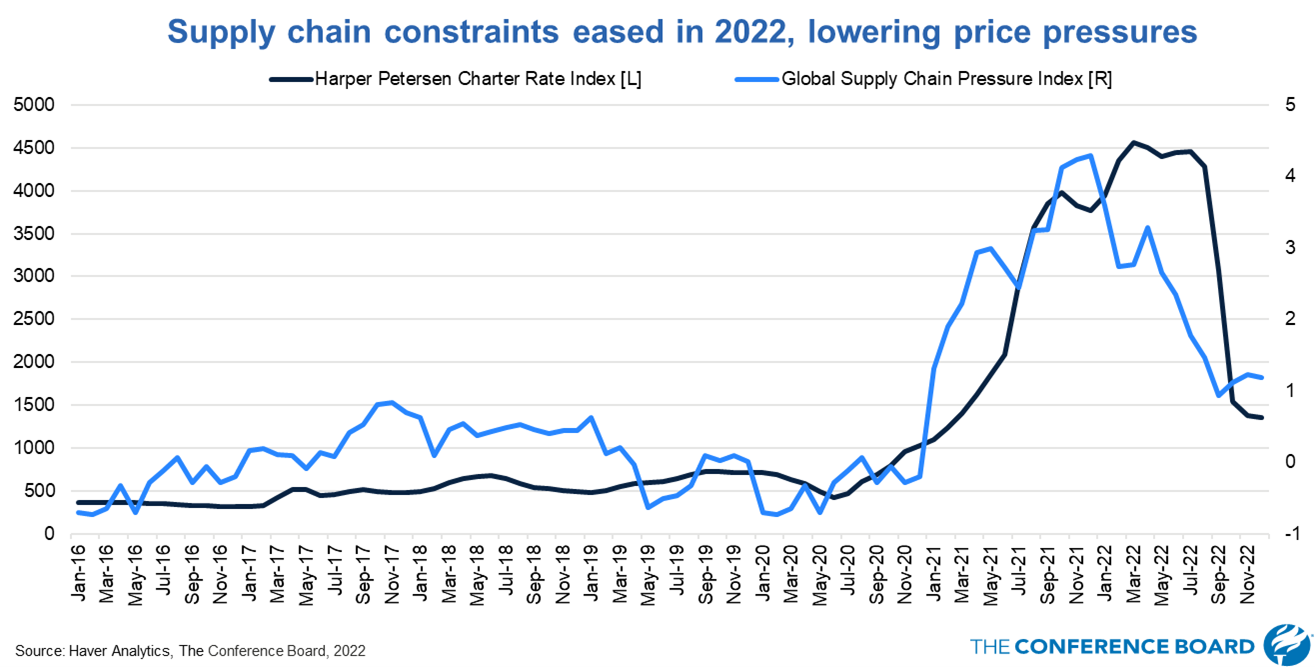

Retail Sales Signal Healthy Q3 Consumer Spending
October 15, 2026
Hotter-than-Expected September CPI Reopens October Hike Debate
October 14, 2026
August PCE Portends Further Hikes Remain Likely
September 30, 2026
September Rate Hike: Not a One and Done
September 16, 2026
August CPI Suggest September Fed Hike
September 11, 2026